
Kyoto
Busy, but beautiful

The Kyoto I remembered is gone. Not that I had much to remember- I have only spent a few days maximum in Japan’s former capital. And such is the way of things- but the change is not a dramatic death by war or earthquake (of which Japan has had its share)- if anything, Kyoto’s death isn’t a physical one, but a more moral, a political… perhaps even a spiritual death.
But I get ahead of myself. After all, I was only here for two jam-packed days.
You might say, “Josh, hyperbole much? Kyoto’s still there. Most of the buildings, the people, the vibrancy and history- all intact. Knock it off with all the dramatic turns of phrase”. And you wouldn’t be the first to accuse me of exaggeration- you wouldn’t even be the first this week. Get in line. Hyperbolic or not, Kyoto has changed in many ways, and mostly not for the better. One only has to browse the headlines of these articles to see that all is not well.
And I became a part of that problem for a few days last December.
It’s a difficult line to tread fairly- on one hand, the joy of travel, of experiences, culture, food and the reliance on tourism as a post-pandemic lifeblood for so many industries- but on the other hand to be a cog in the touristy wheel of destruction (there’s that overstatement again. Maybe.), adding my small part to breaking down the very cultures that I seek out and admire… It doesn’t always feel amazing.
The problem isn’t just being a tourist in Kyoto, or even Japan1. I’ve mentioned it in the past when talking about Machu Picchu, the Atacama, and elsewhere. The problem with the rapacious increase in tourism and “lifestyle creation” is pushing places like the city of Venice to its tipping point: where the response can range from chilliness, to outright annoyance, to sometimes a bit of violence.
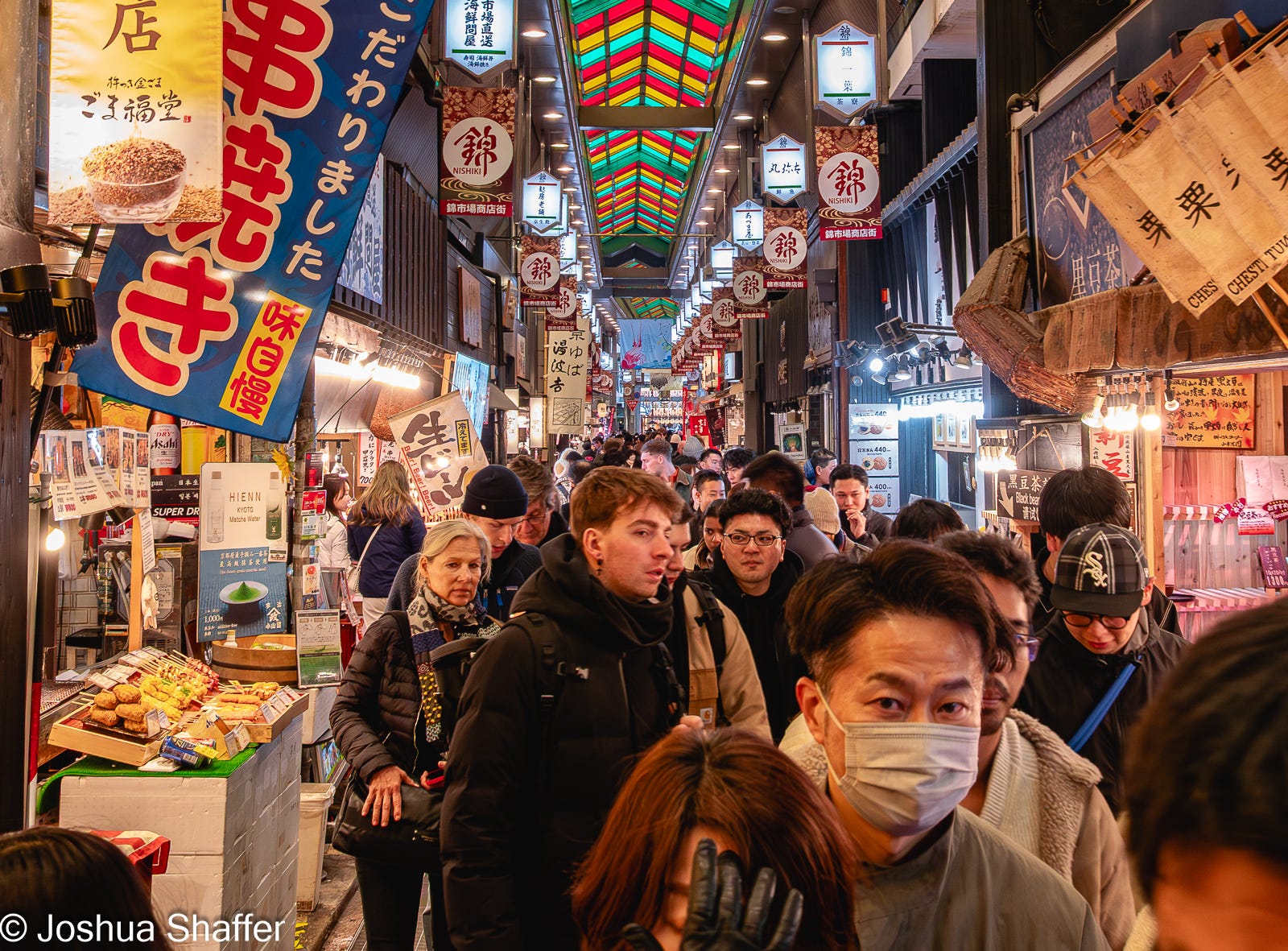
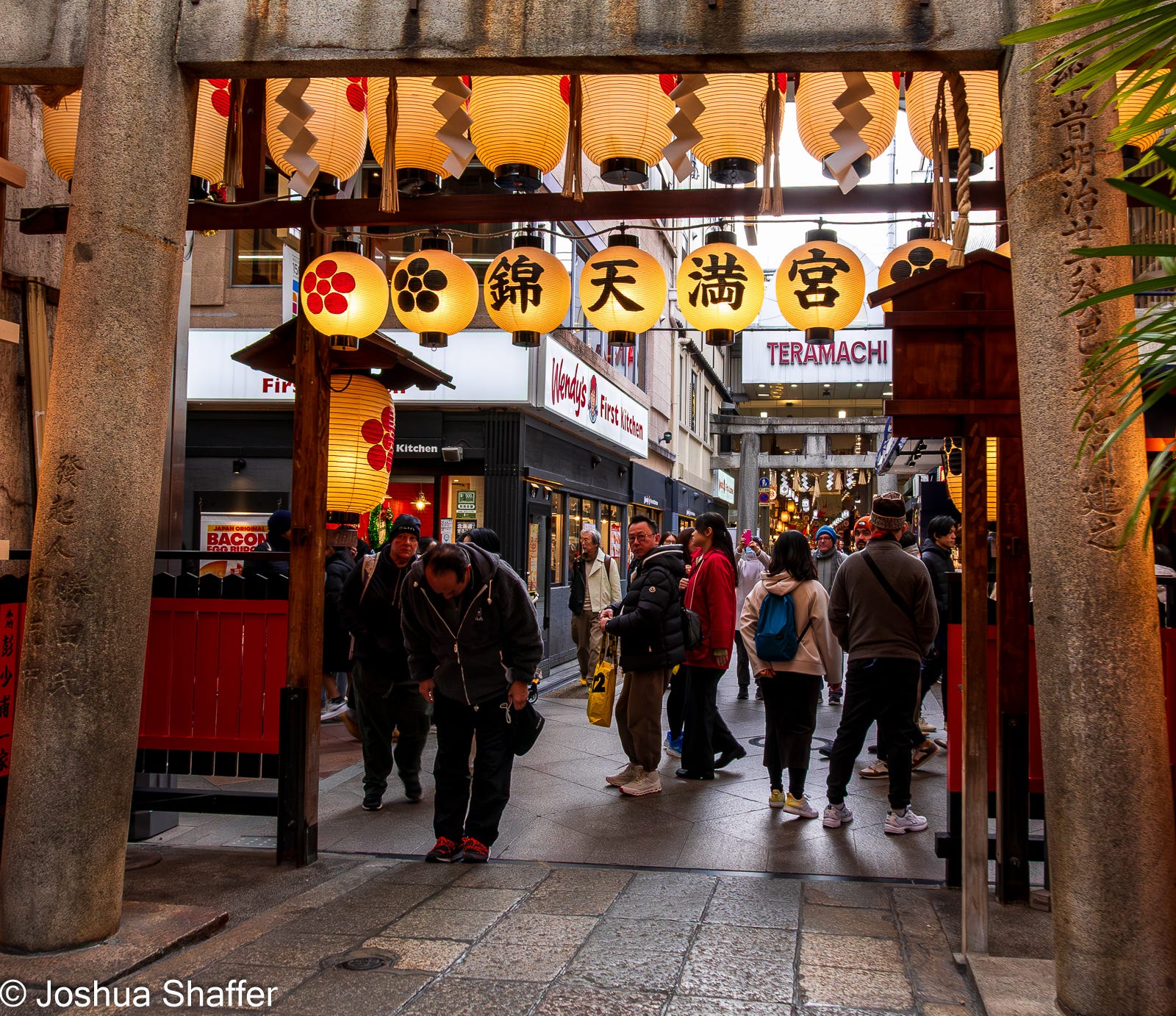
So what to do? The thought lingers with me while walking the gorgeous and crowded streets of Kyoto- trying to find a table in a restaurant (any restaurant!) and thinking back on my first trip to Kyoto fifteen years before- my wife and I, right before the ubiquity of the always-on social media.
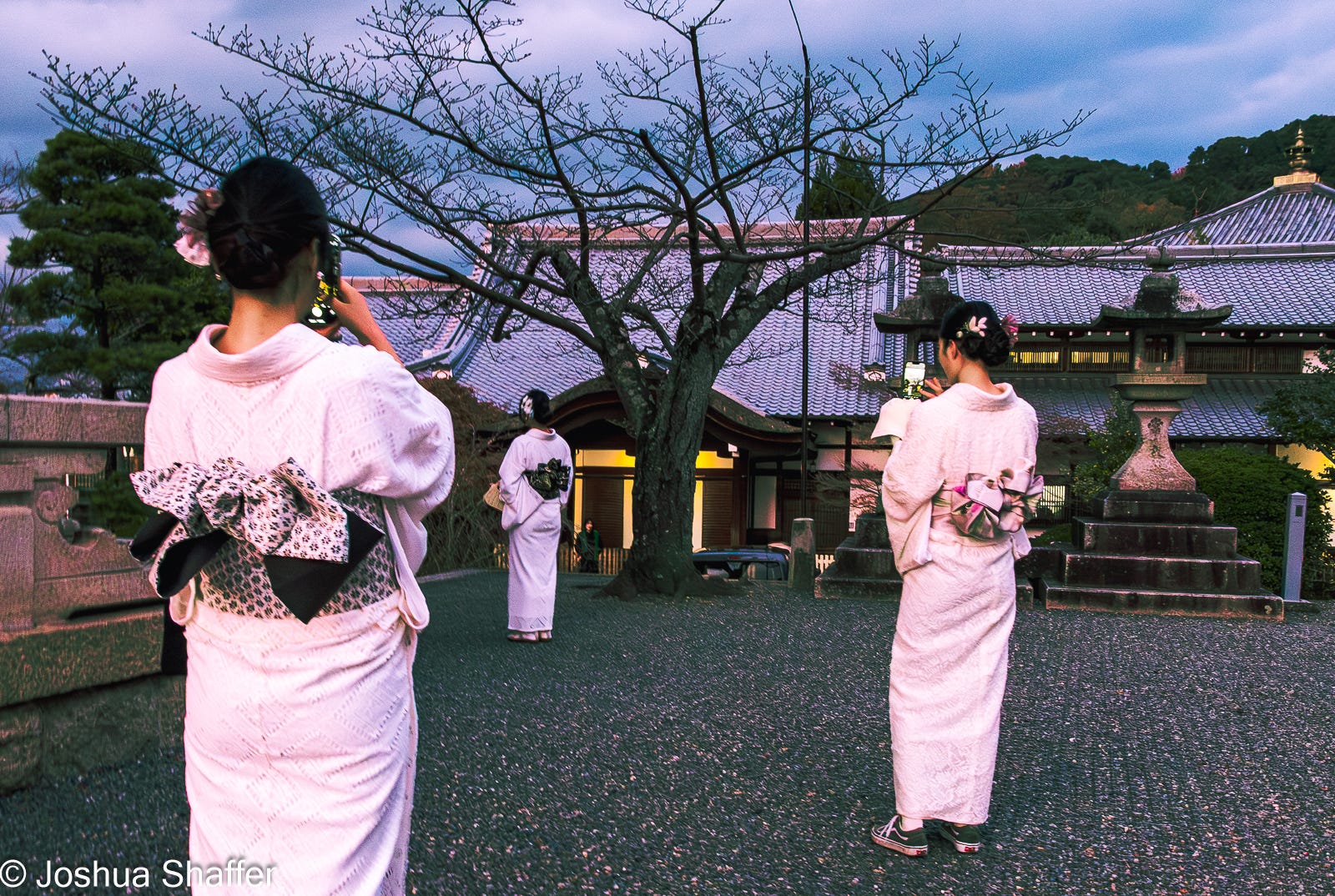
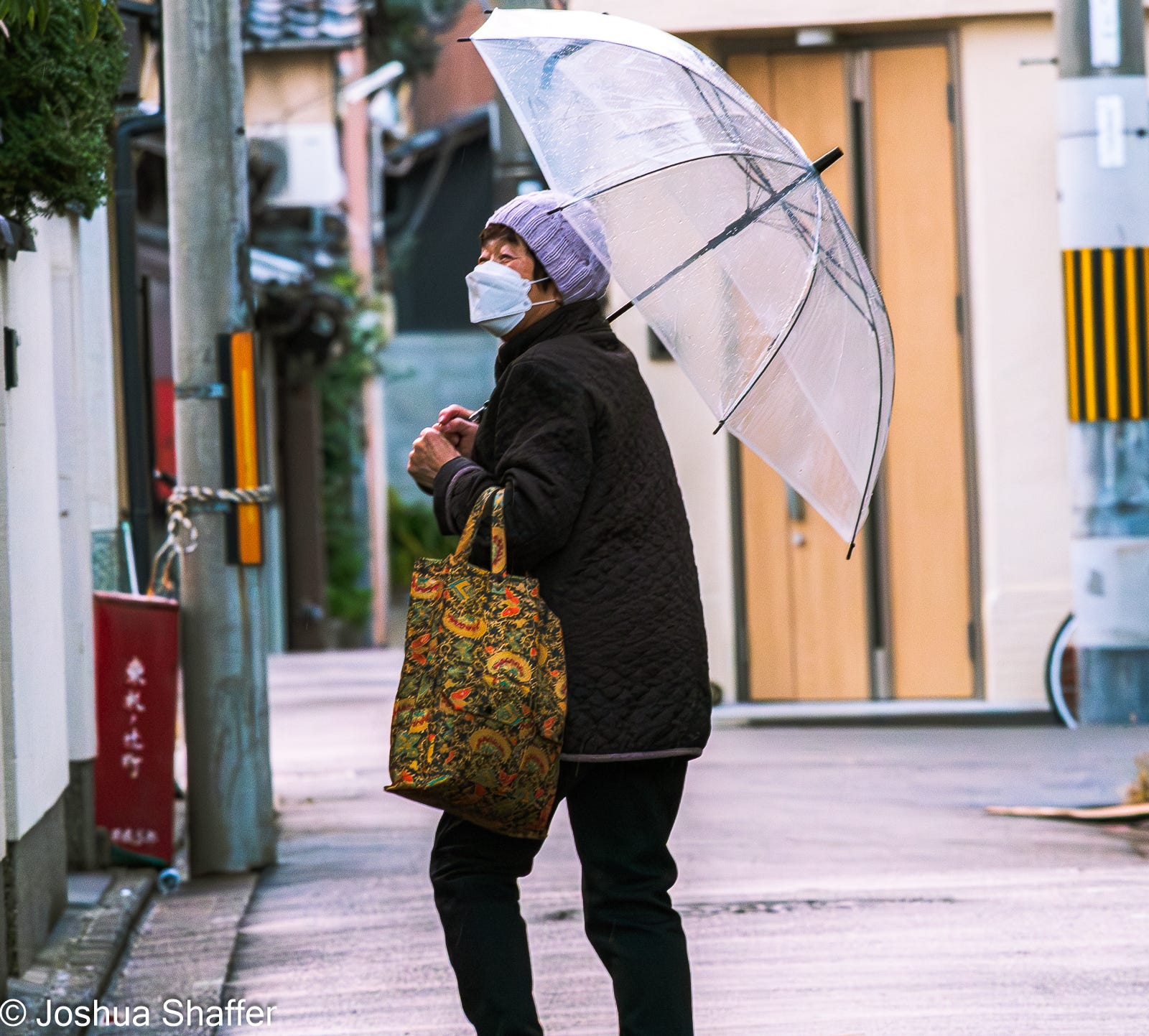
Then, you could walk the streets at a reasonable pace, spread out from other travelers- you could see small groups of ladies wearing traditional kimonos- and they weren’t getting surrounded, harassed by people jockeying for a picture. Very “old man yells at cloud” of me, but if I only had my most recent Kyoto experience to draw on, I wouldn’t find the city that amazing.
And that’s a shame! It is amazing- at 1,200 years old, it was the ruling seat of Japan for more than a thousand years. The shrines, temples, traditional wooden Machiya houses, and a graveyard my wife, brother-in-law, and I once accidentally stumbled into during the pre-Google maps era are all ancient, immaculately cared for, and aesthetically beautiful in a way that seems harder and harder to find in the world. The city is old in a way that we from “the west” can’t really comprehend, so Kyoto deserves to be a bucket list destination.
But I can’t say that, at least in the present iteration, it is. Mercifully untouched by war and natural disasters, Kyoto is one of the few places in Japan where you can really get a small glimpse of what life might have been like in a bustling metropolis of Edo or Meiji-era Japan. Going in, we knew that so near to the holidays would make Kyoto a wild and packed place to be, so we only allotted 2 1/2 days- a timeframe that cannot go beyond scratching the touristic surface of the city. The point was to show a glimpse of this to the boys- far too young to remember our time living in Japan, we hoped that this would serve as an anchoring, if chaotic, reminder of their toddler home.
If you go to Kyoto —and again, the present tourist landscape would have to change for me to recommend it seriously- here are a few things to do, places to eat, and places to grab a coffee.
To Do:
With over 2,000 temples and shrines2, there is no shortage of religious history/iconography to choose from. A few of these larger complexes are incredibly busy, but with so many, it isn’t hard to find a tranquil moment in Kyoto, thankfully (though if tranquility is what you seek, I highly recommend avoiding the large cities and heading north to Nagano, or even further north up to the island of Hokkaido and spend some quieter days there).
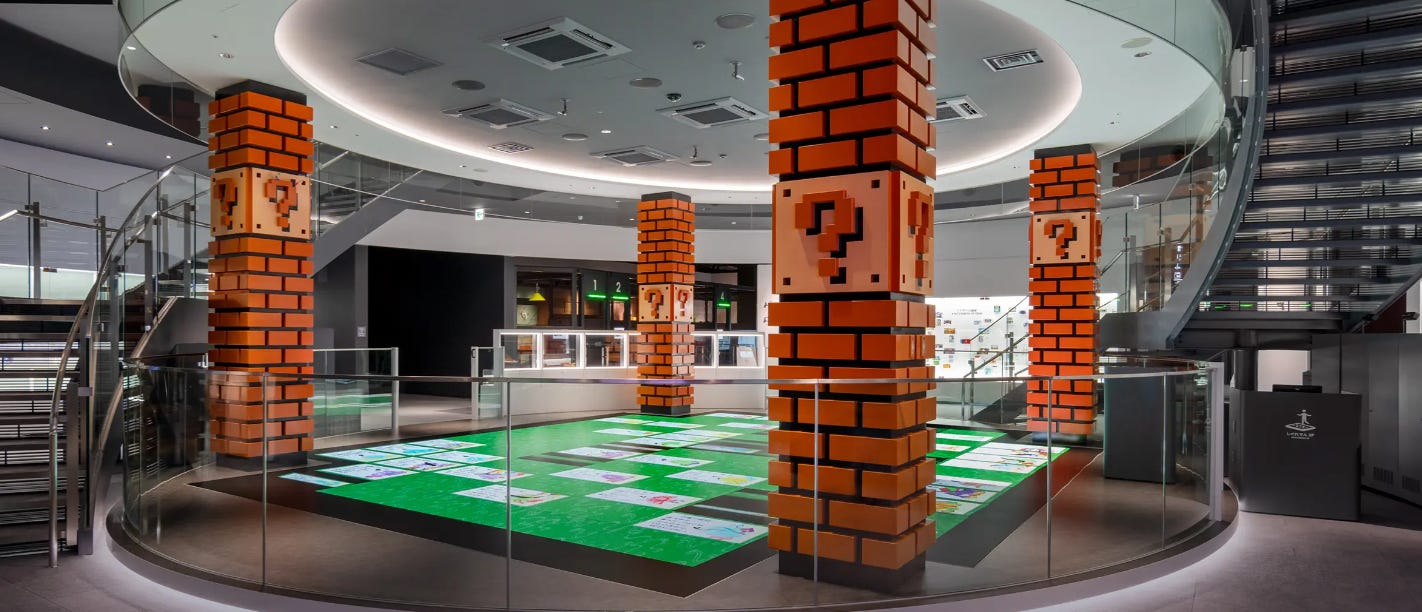
Firstly, a word about what we didn’t do: which was go to the Nintendo Museum of Japan. It turns out, I should have done more research than, say, the week before arriving in Japan- per the Nintendo website: “Entries will be accepted three months prior to your visit on the ticketing website, and draws will be done on the first of the month following the application. You will be informed via email of the results of your application.”3 Good to know.
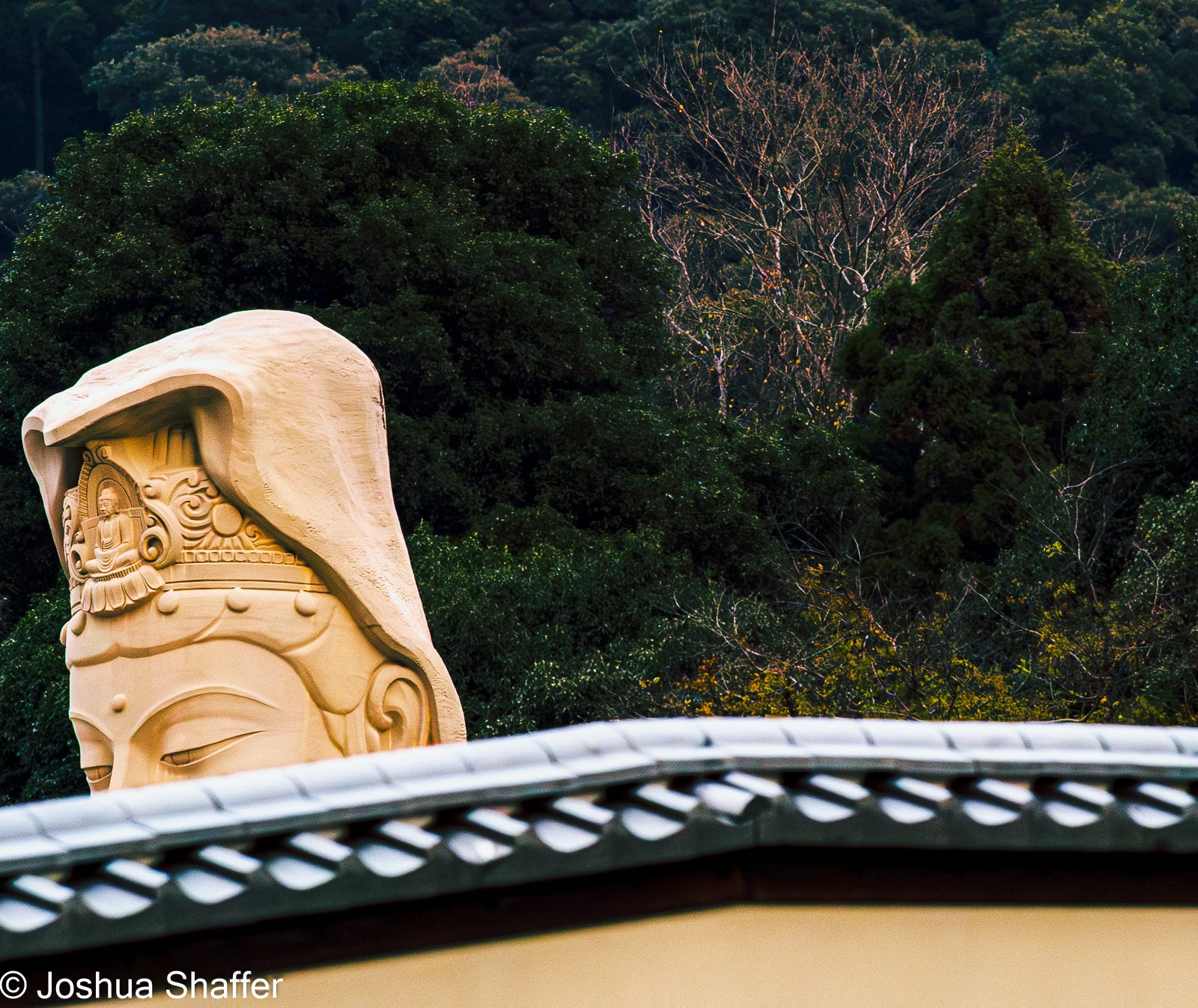
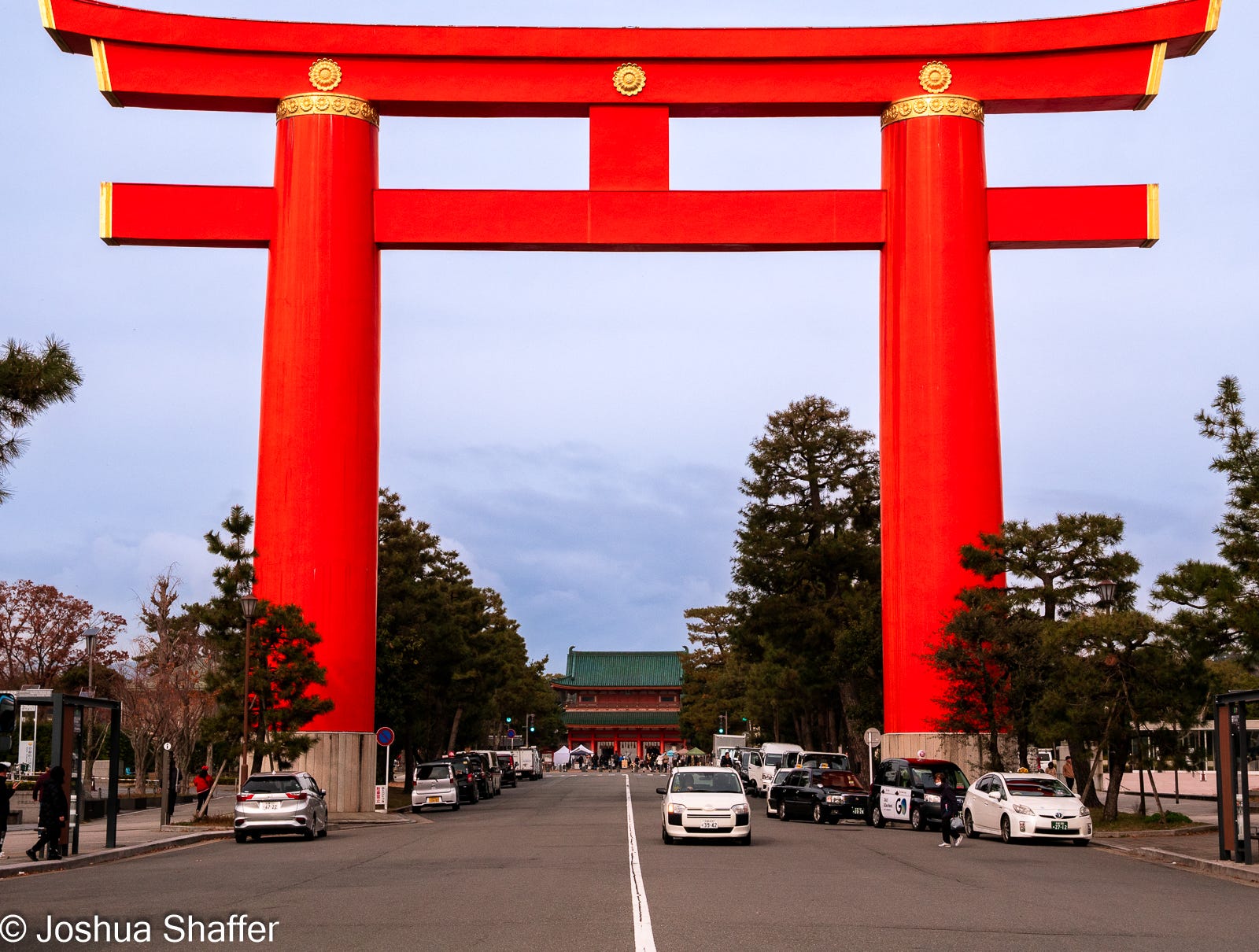
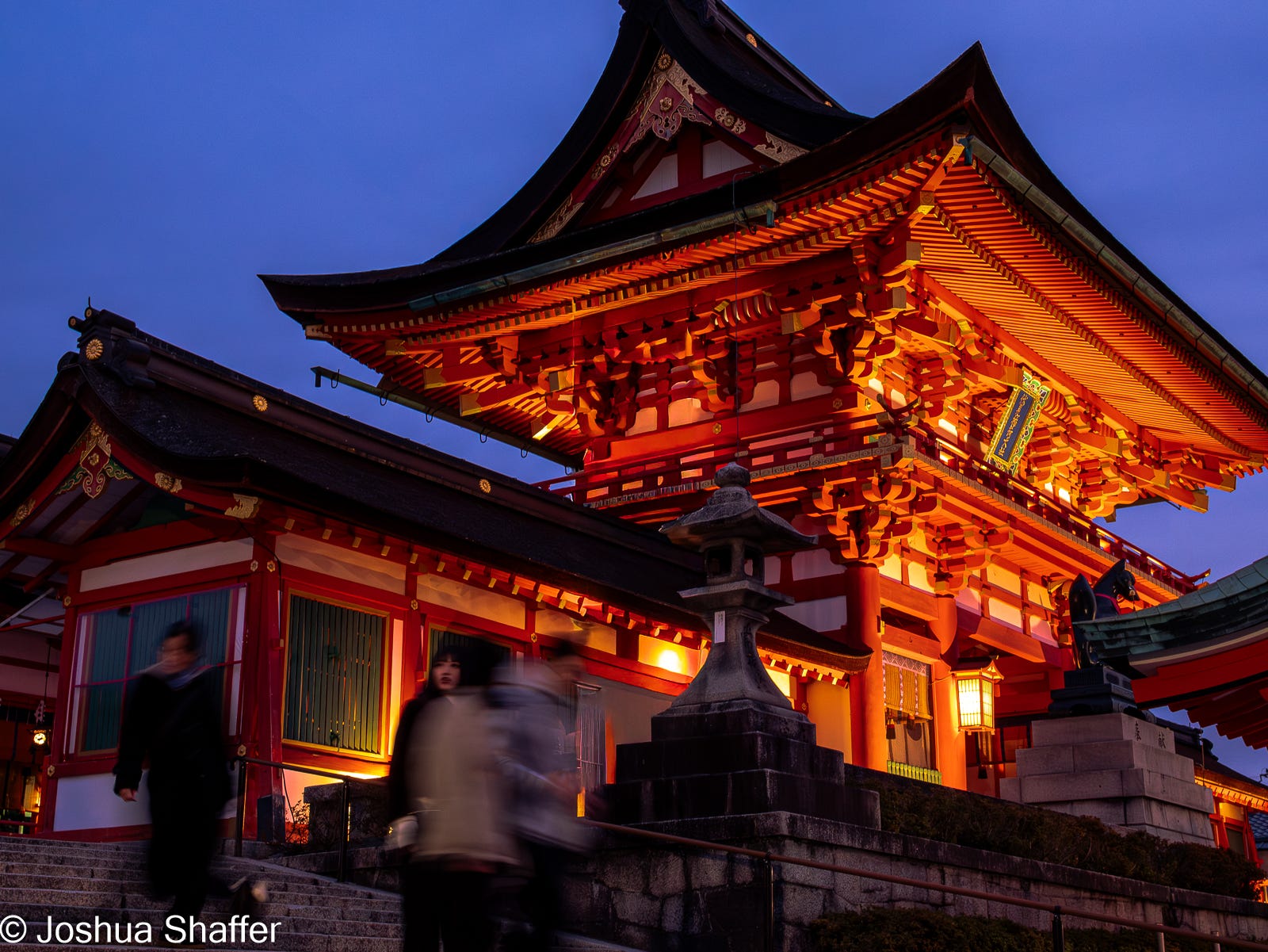
Despite this stinging setback, we crammed a lot into a few days in Kyoto, which was cold but Snowless (for a chance at snowy days, January or February are better options). We may not be Shriners (no silly hats or go-karts, unfortunately), but you wouldn’t know it by the number of shrines we went to. The Fushimi Inari Taisha Shrine, Heian Shrine, and Kandakara Shrine were all standouts for us.
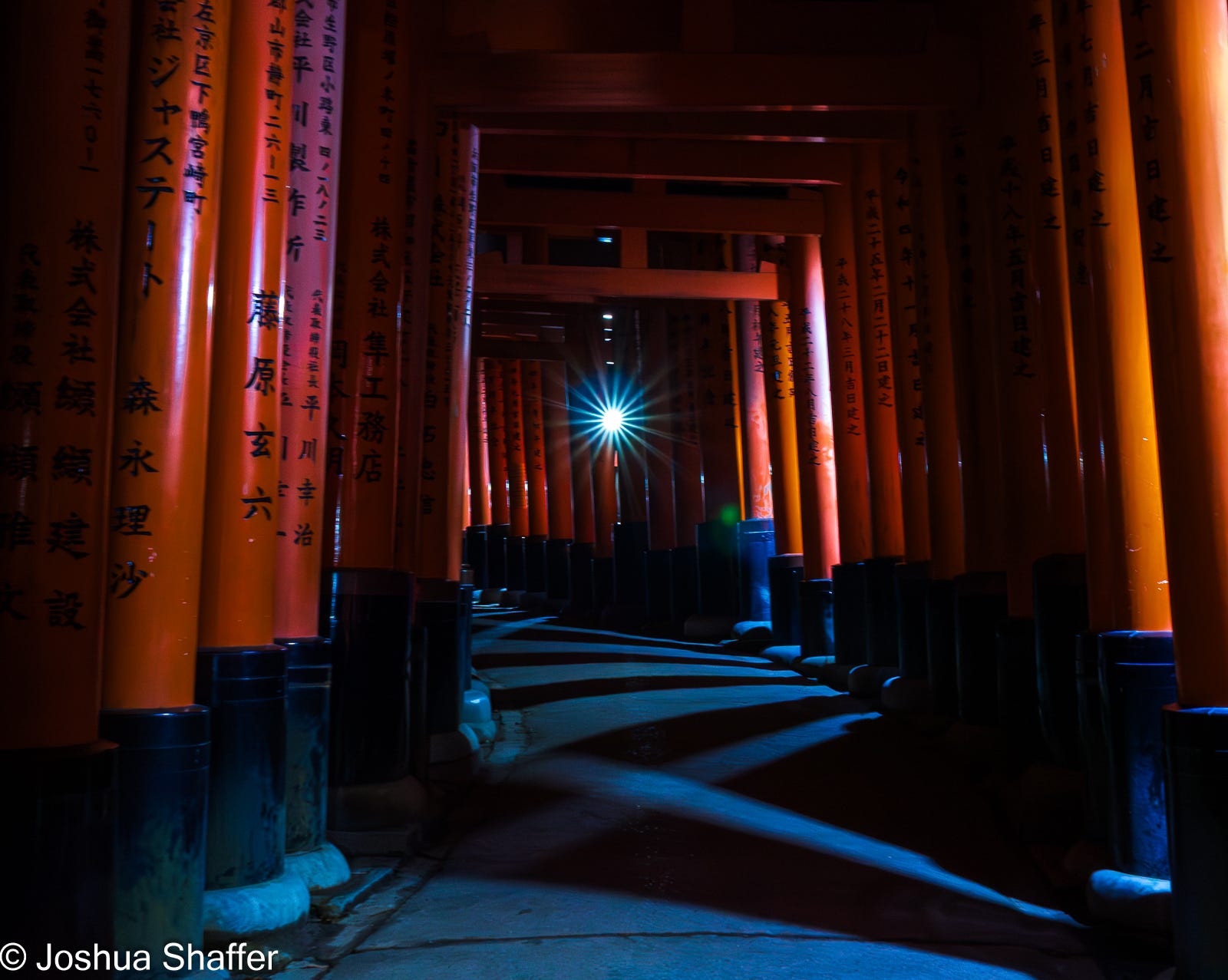
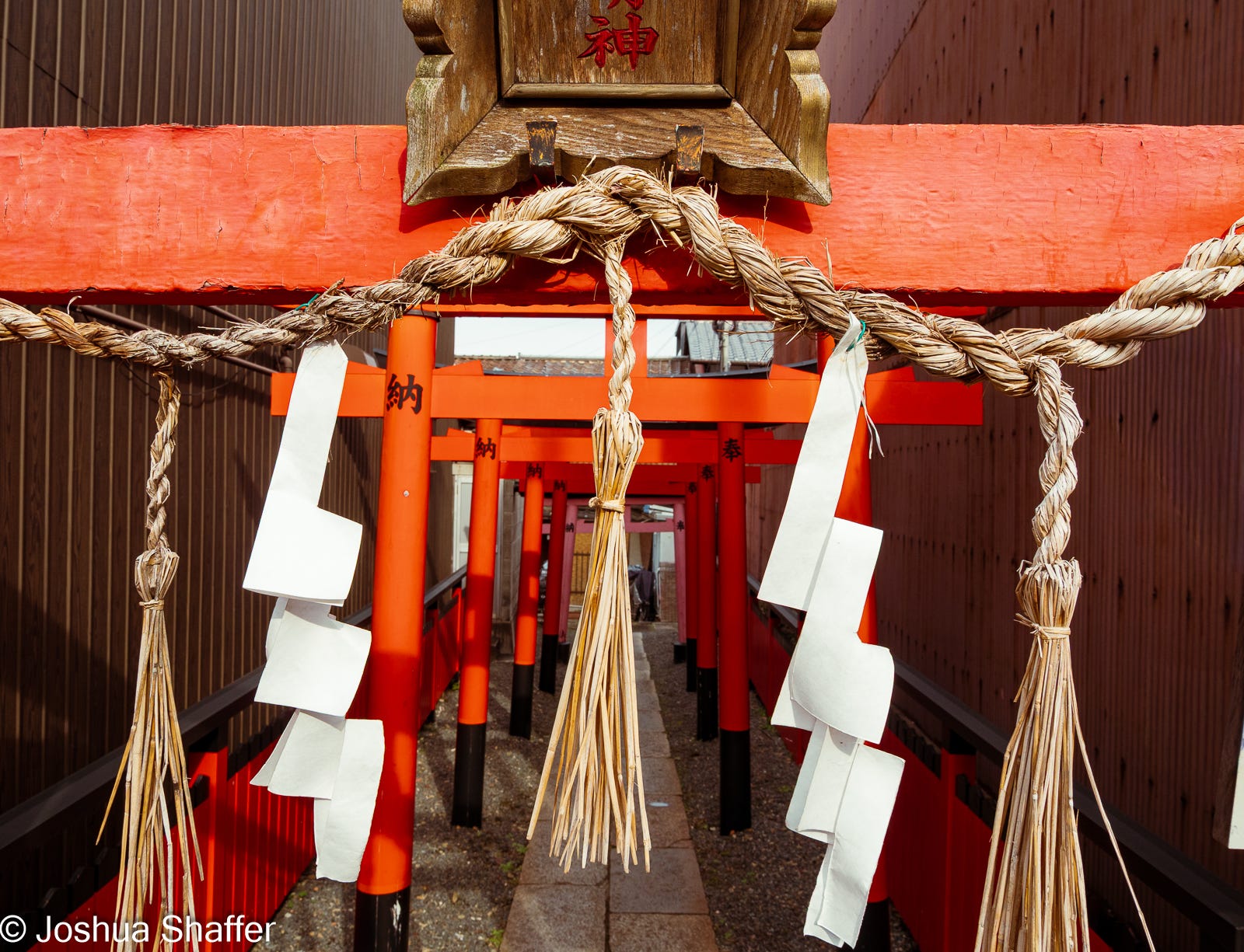
The Fushimi complex is one of the most famous and sought-out parts of Kyoto, as it is home to the Senbon torii (千本鳥居), “thousand torii”— a 2-hour hike up the mountain and through almost one-thousand bright-orange 15ish foot tall torii gates. I had done this trek many years before, but this time we went at night where smaller crowds and an almost ghostly feel made the trek feel equally intimate and eerie.
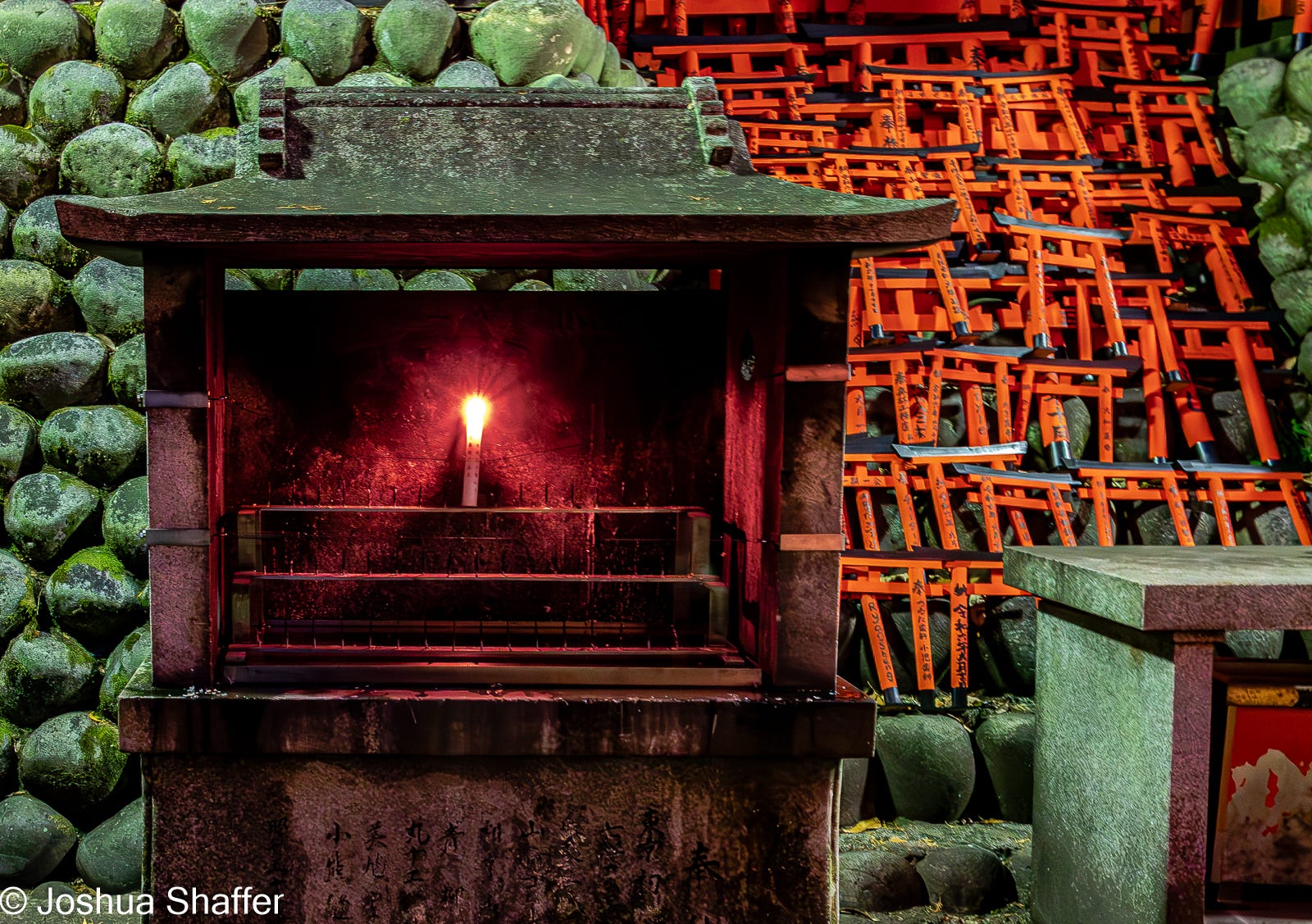
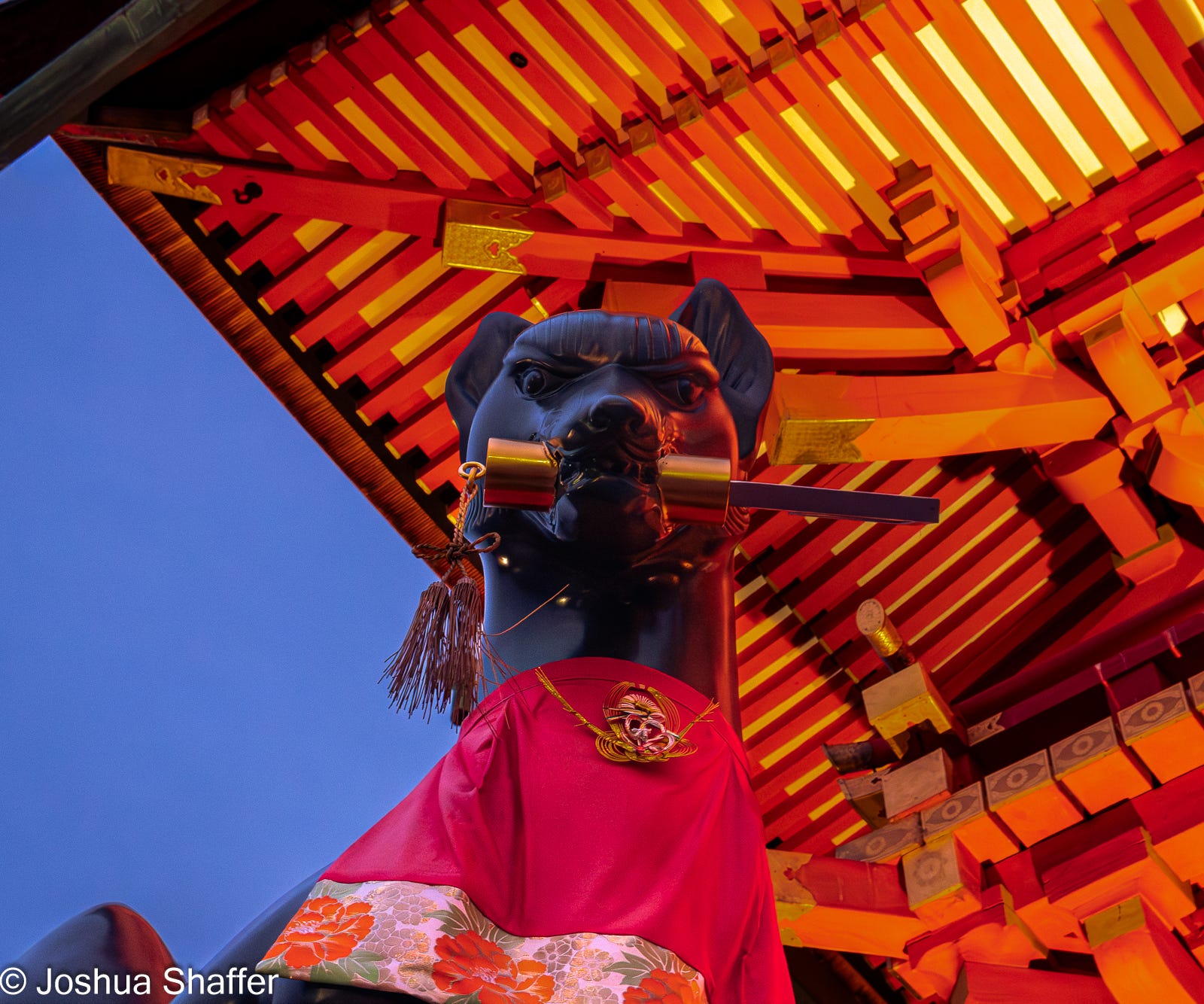
Within the Kandakara complex are several other shrines before and during the torii hike, where there are also fox statues lining the paths and guarding the shrine entrances. The Azumamaro Shrine, another located within the complex, is colorful and a joy to walk around. All these sites are easily navigable utilizing a few train stops and some pedestrian power (Kyoto is hilly and will burn the quads. Embrace it).
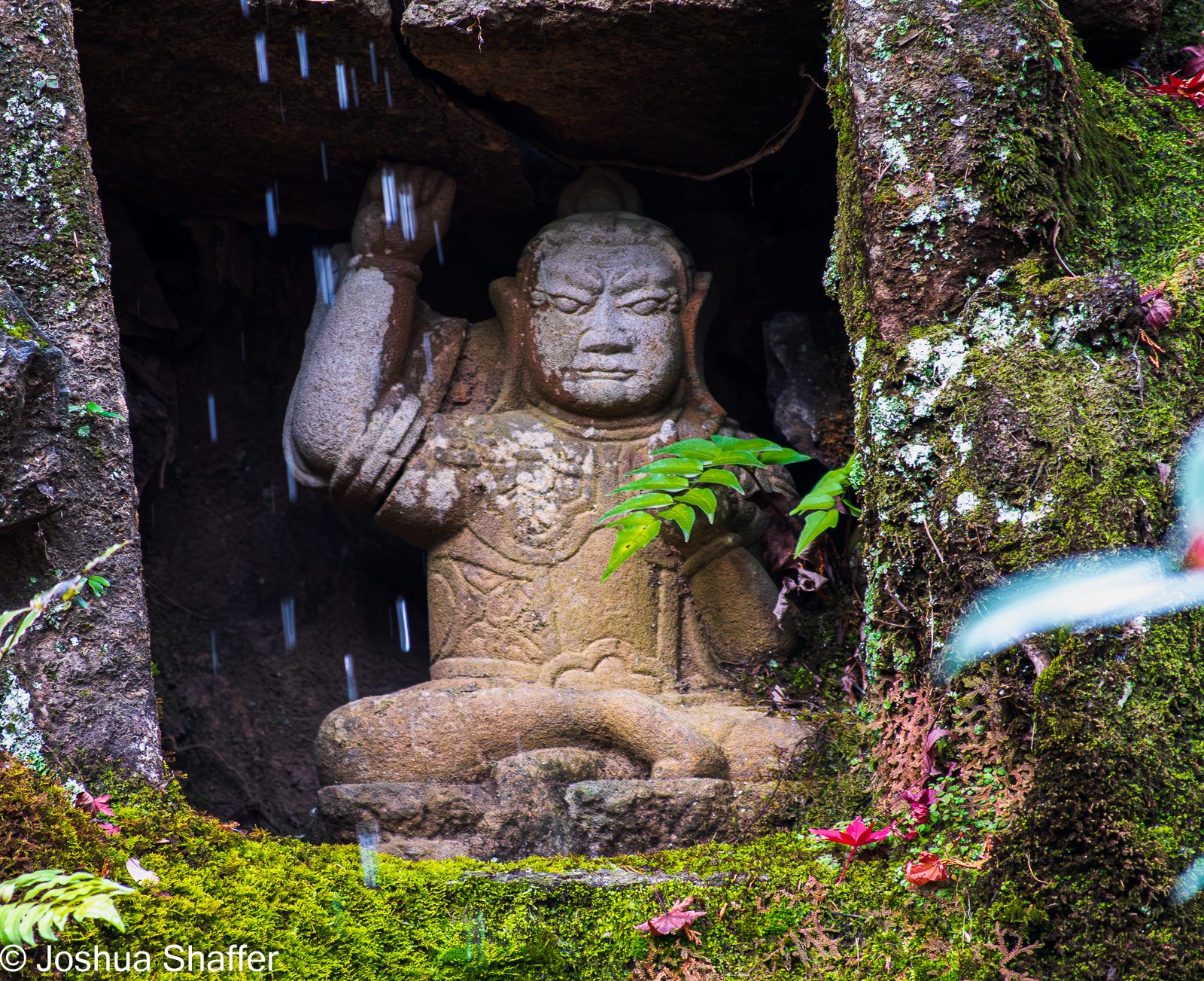
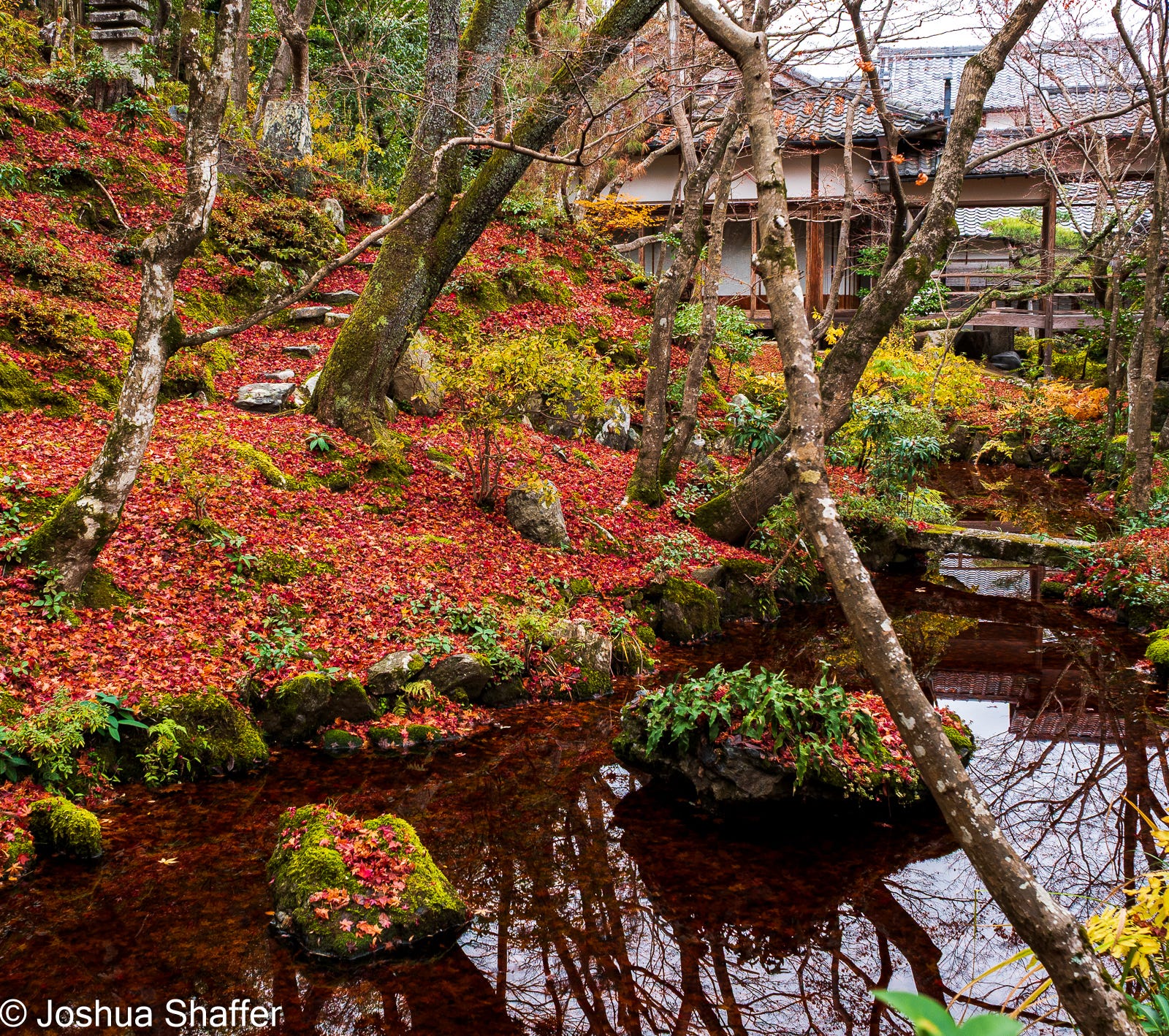
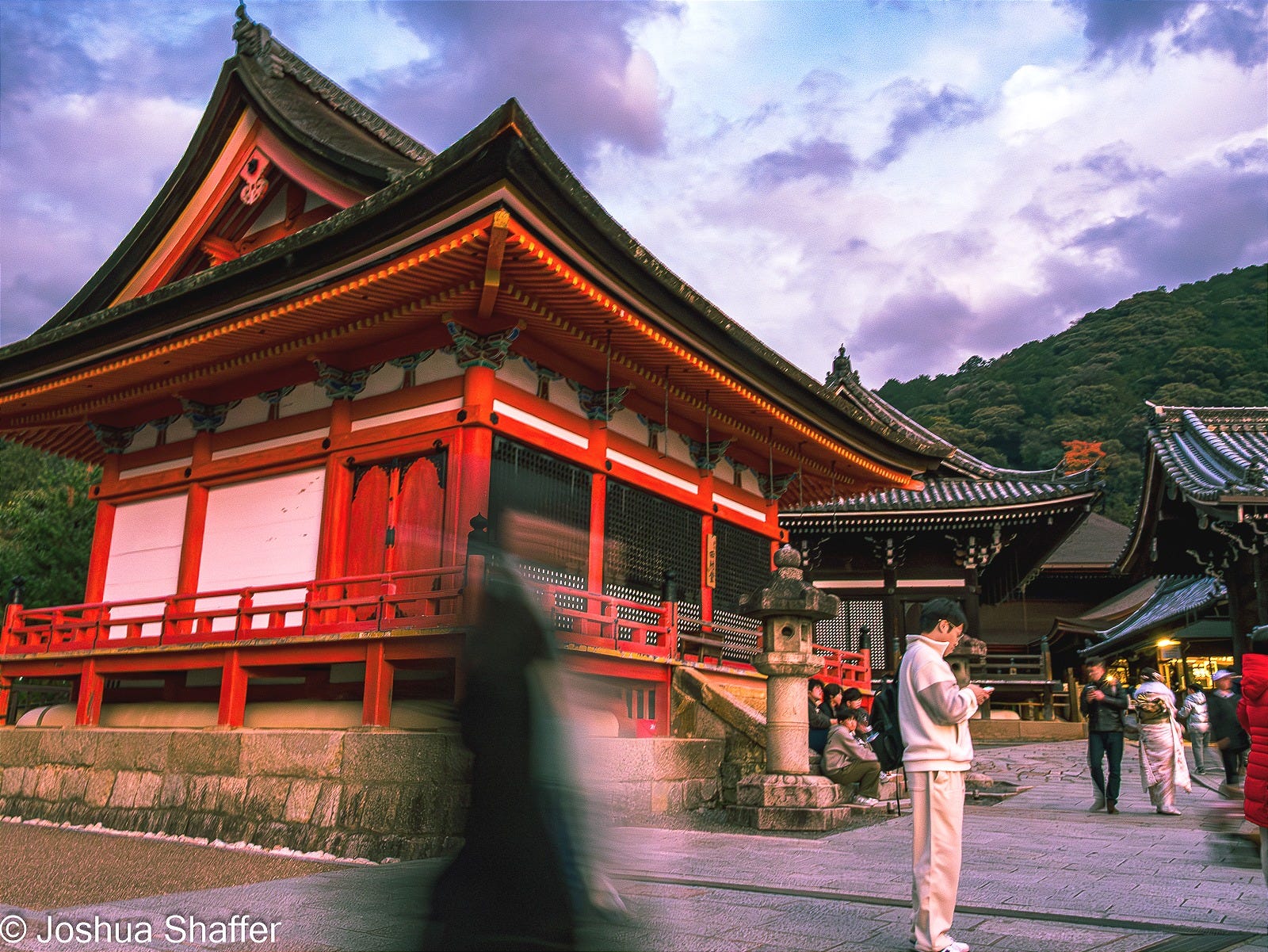
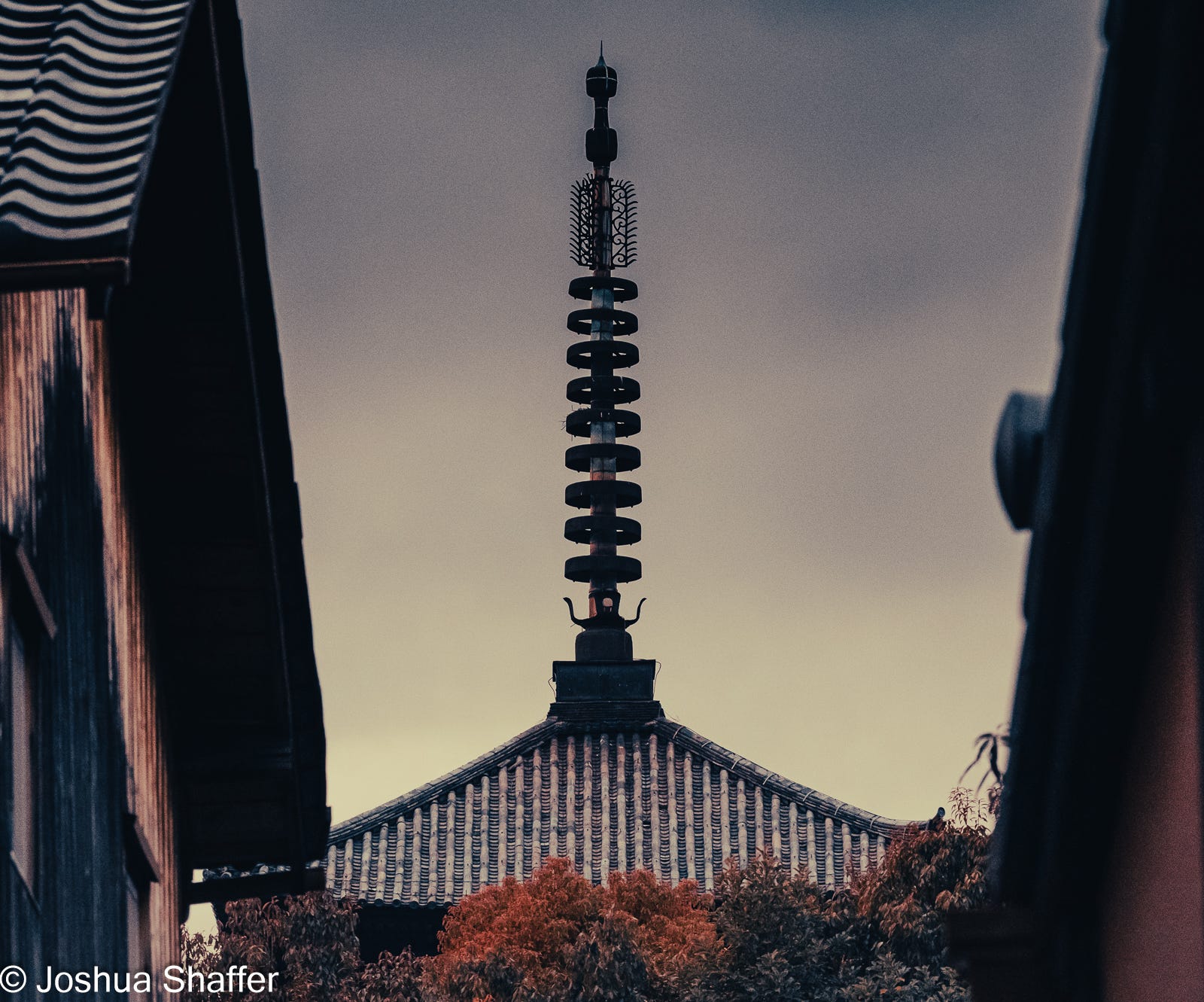
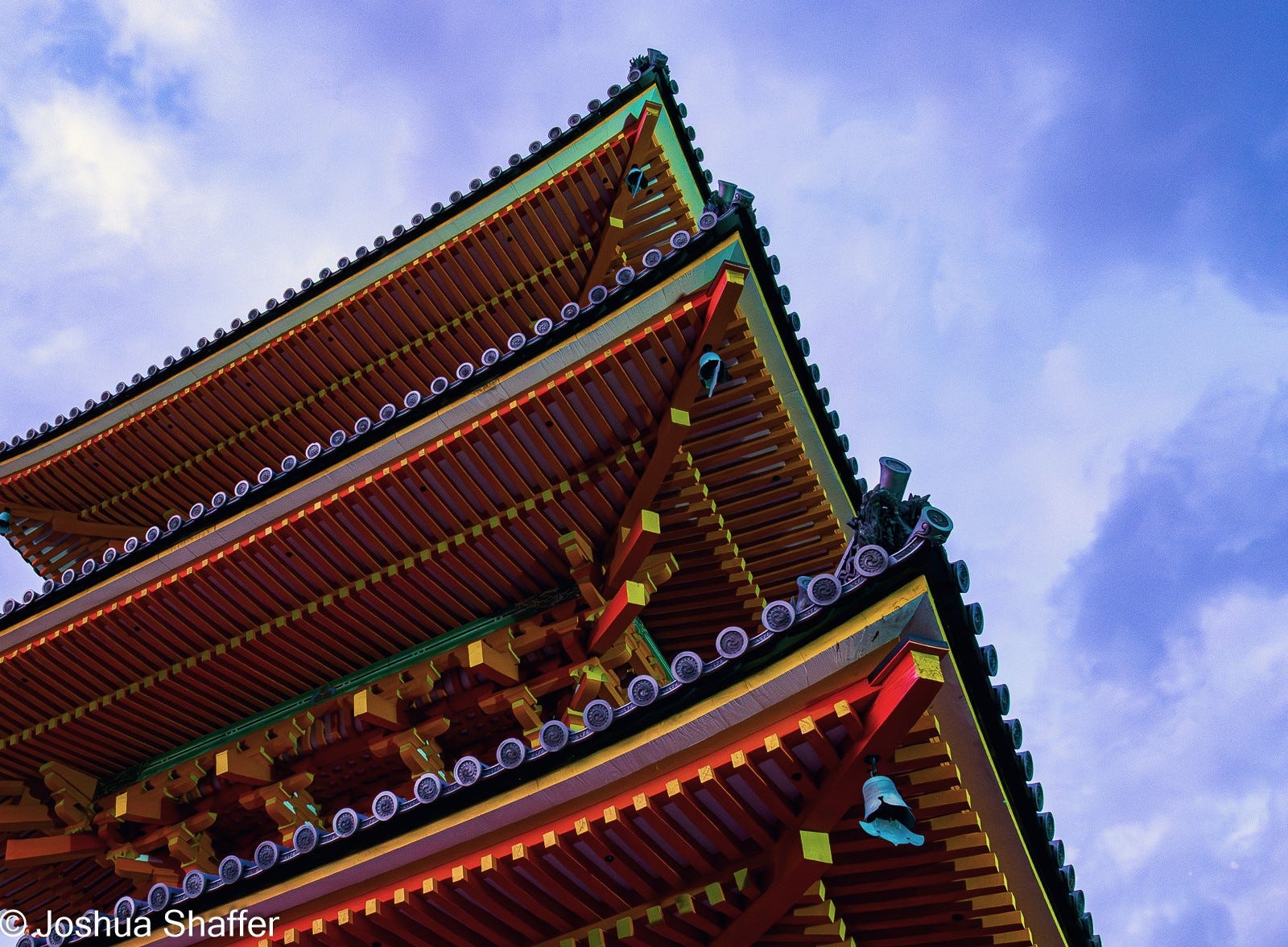
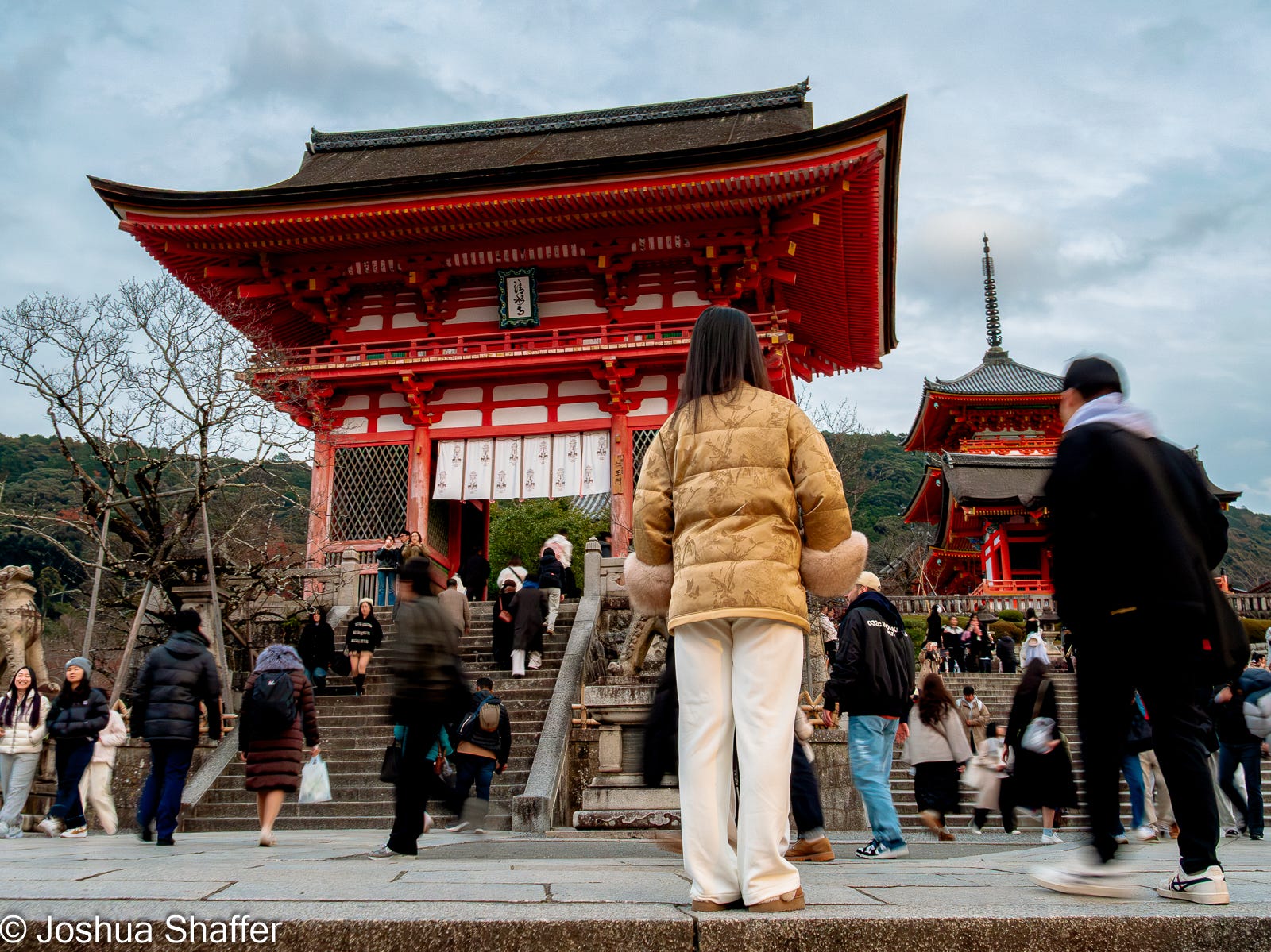
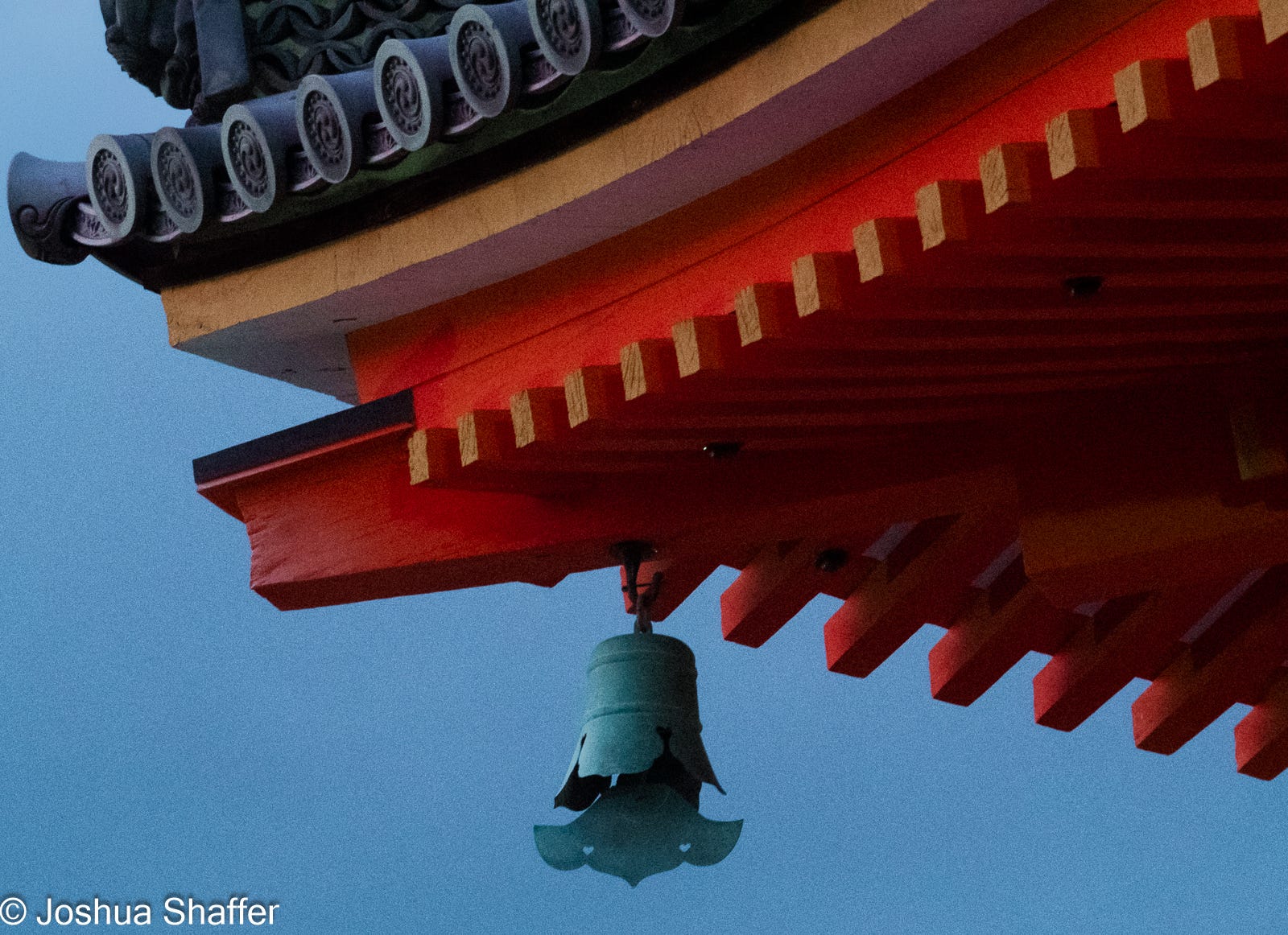
In addition to shrines, there are many temples to be had- we had reached temple burnout a bit by this point and neglected two of the most famous: the gold and silver temples. I also inexplicably missed the famed rock garden. Whoops. But among the temples visited, Kiyomizu-dera (and the Nio-mon gate and Sanjūnōto Pagoda near the entrance) was probably one of the definitive must-sees of Kyoto (an impressive view of the city, to boot). It was crowded and chaotic, colorful and fun- and its near opposite was Jōjakkōji Temple, the most peaceful and meditative surprise of our Kyoto stay.


Situated a few quiet streets from the overly-touristy Arashiyama bamboo forest, the Jōjakkōji temple was crowd-free, covered in crunchy, fallen leaves, and imbued with tranquility. Truly one of the highlights of my entire trip.
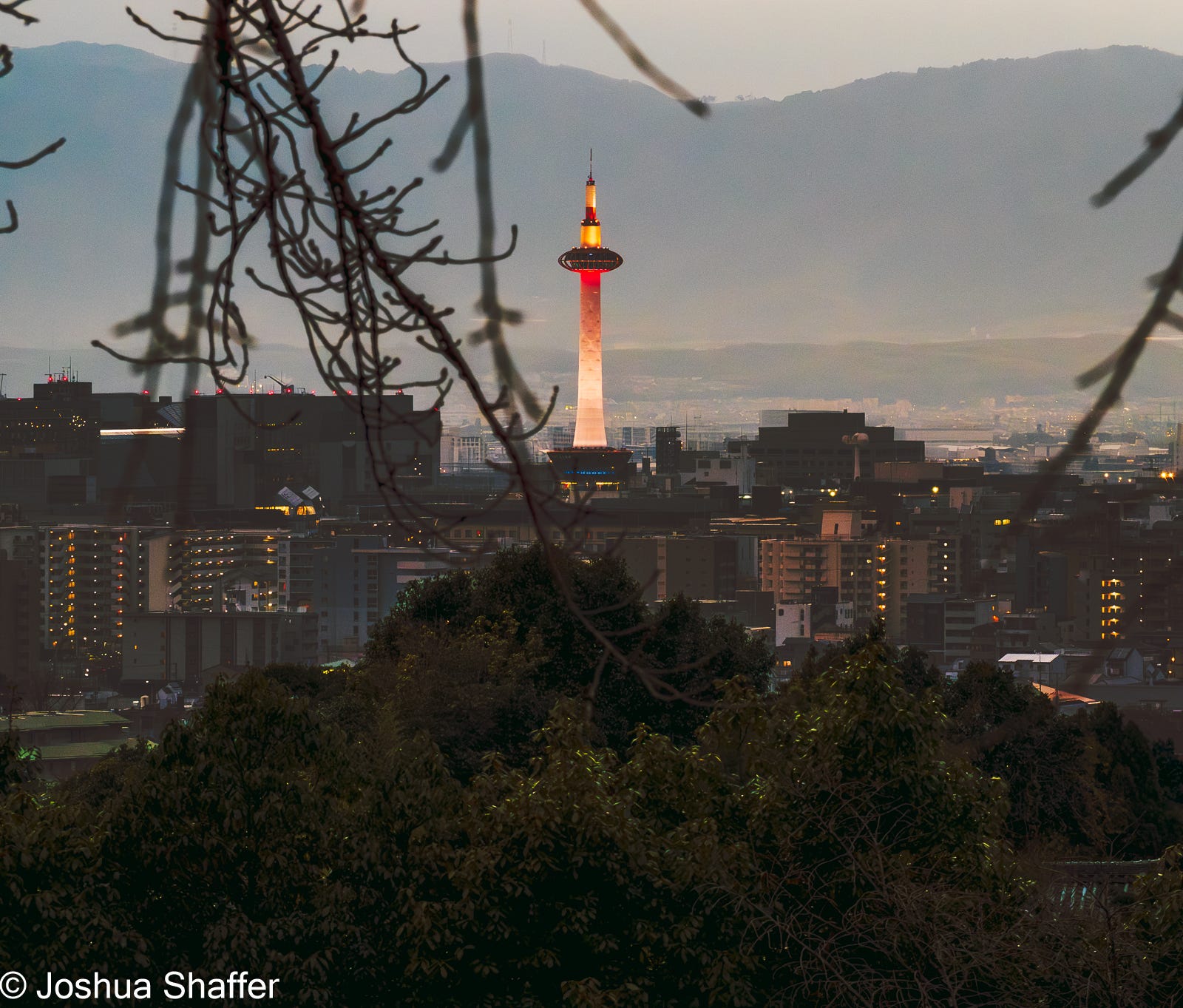
But enough about temples! They are beautiful, sacred, old… One could spend a lifetime learning the history, the politics, and the social undercurrents associated with them- and it would be a life well-lived, I think. But there were other things to see, like the Arashiyama bamboo forest: it’s crowded, but for the dual-view of towering bamboo plants and of Weebs donning rented kimonos, it’s not to be missed.
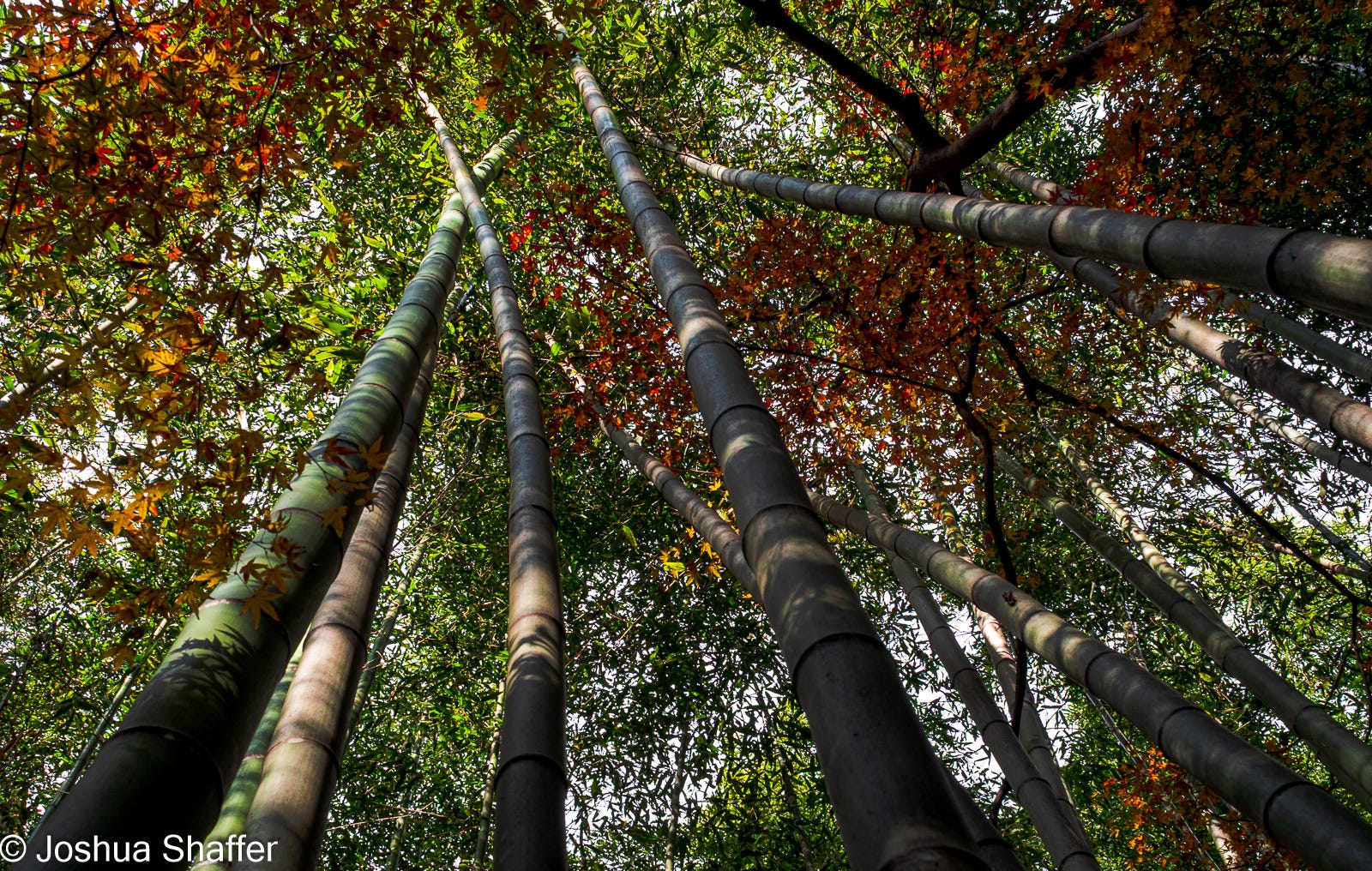
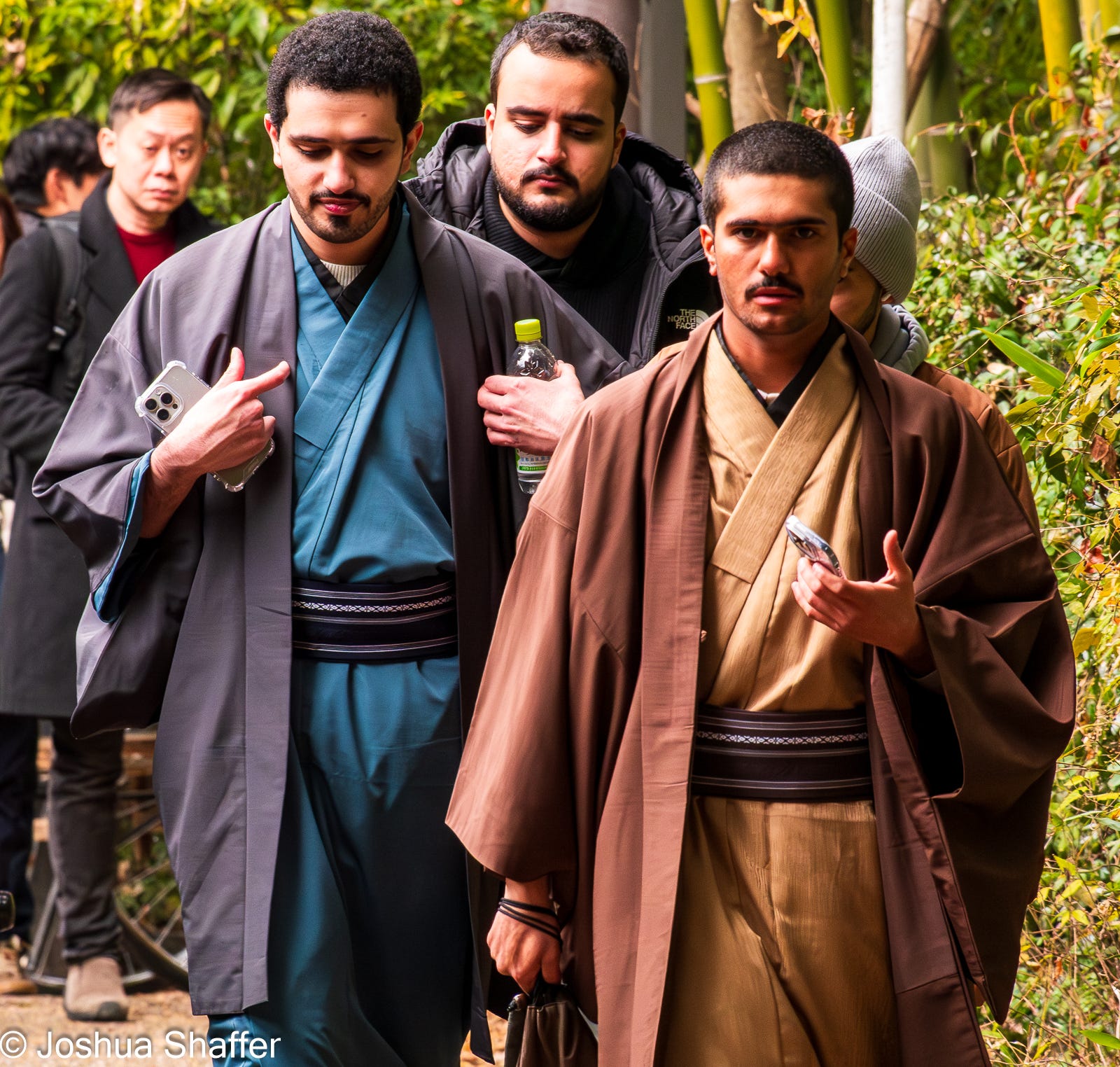
Other than being crammed, the forest was lovely- a densely, intentionally cultivated park on a perfect winter day. Sunny warmth seeping in through gaps in the bamboo, and many a handcart driver lugging giggling tourists back and forth made for a pleasant afternoon.
I had hoped that zoos in Japan had improved in the decade we’d been away, but the Kyoto Zoo still felt far too much like a prison. One had to only look at the primate exhibit to feel the palpable sense of despair. I can’t fully recommend the experience, but there were signs of conservation, education, and rescue in the zoo, which is better than what I have experienced here in the past.



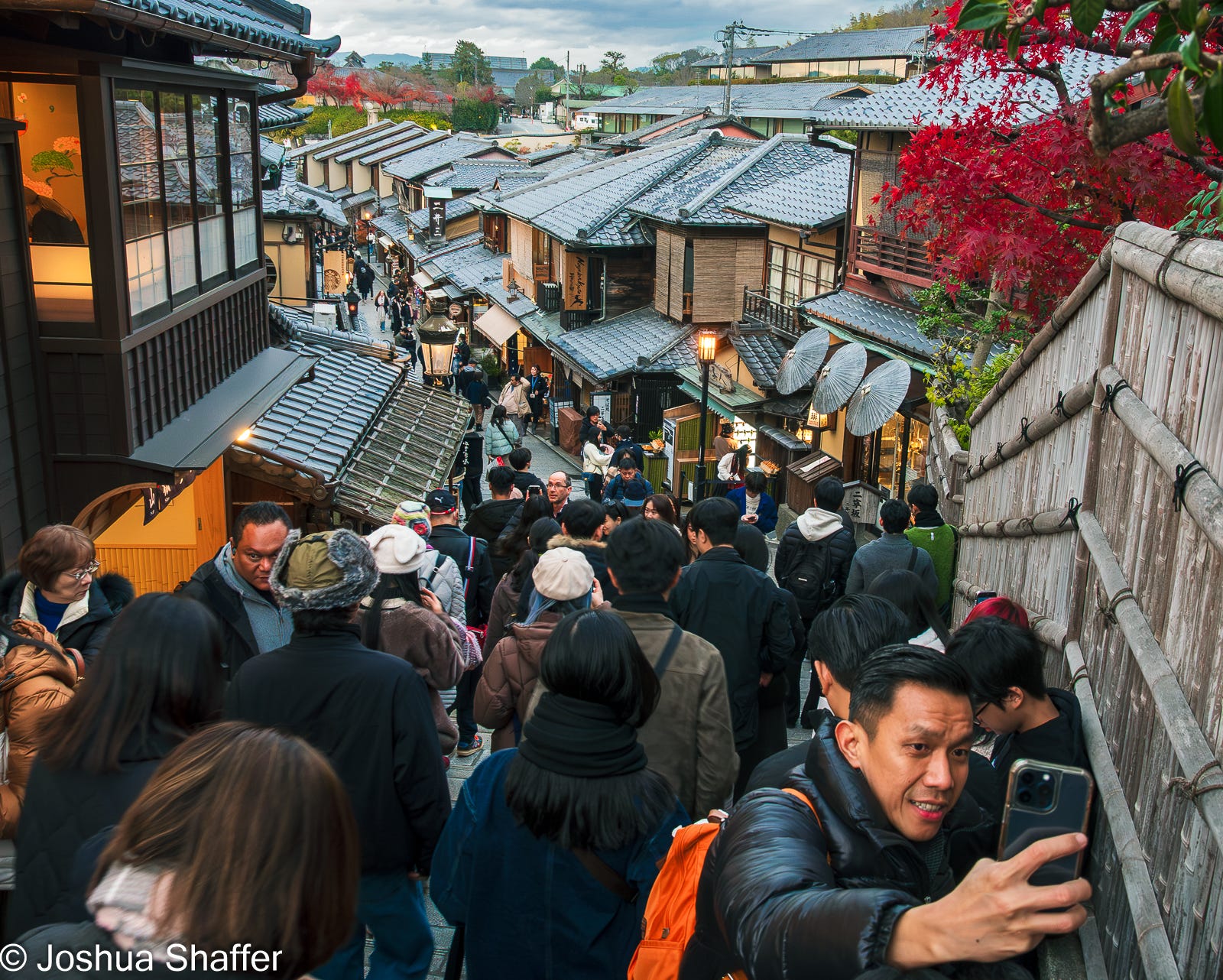
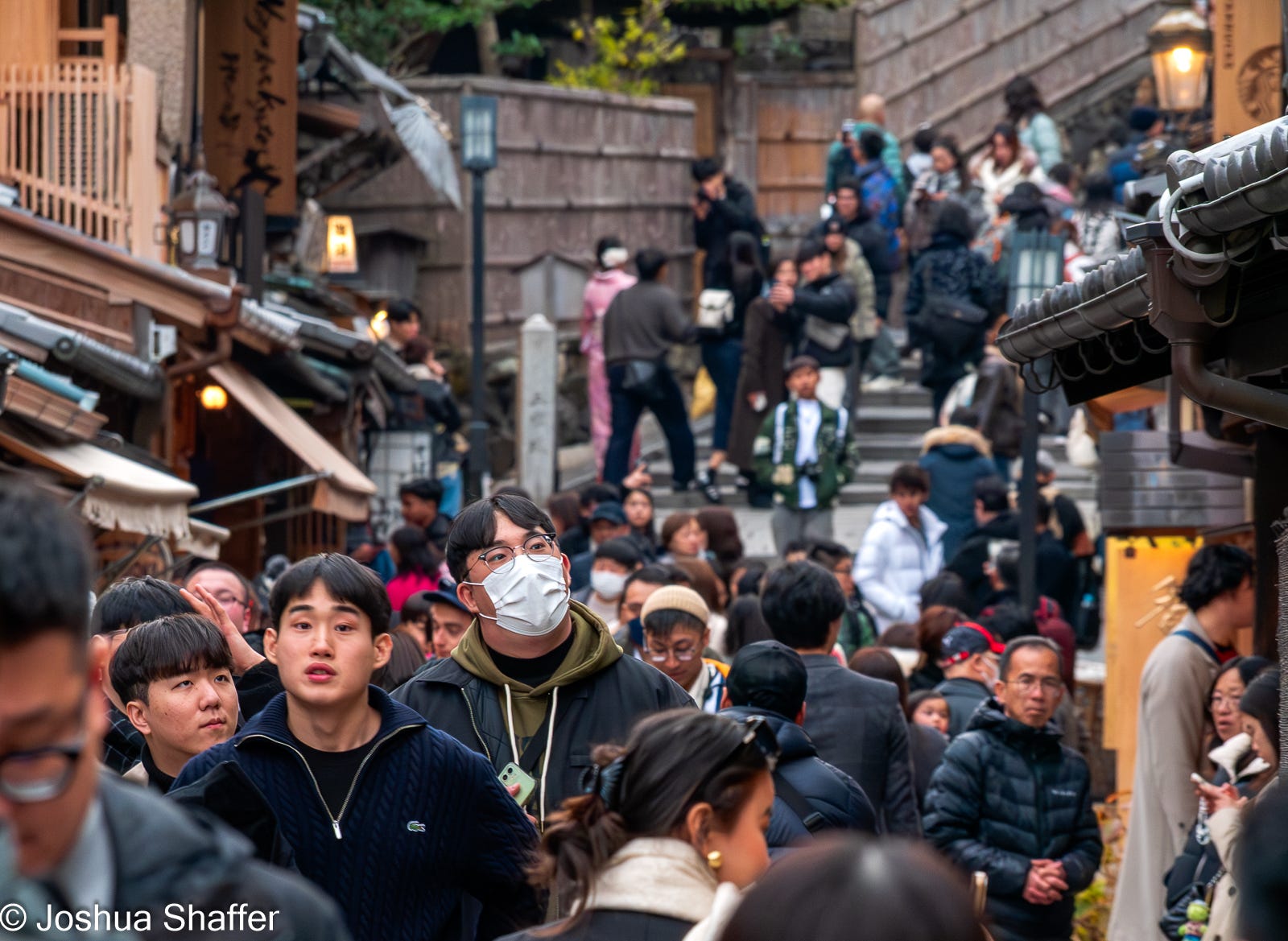
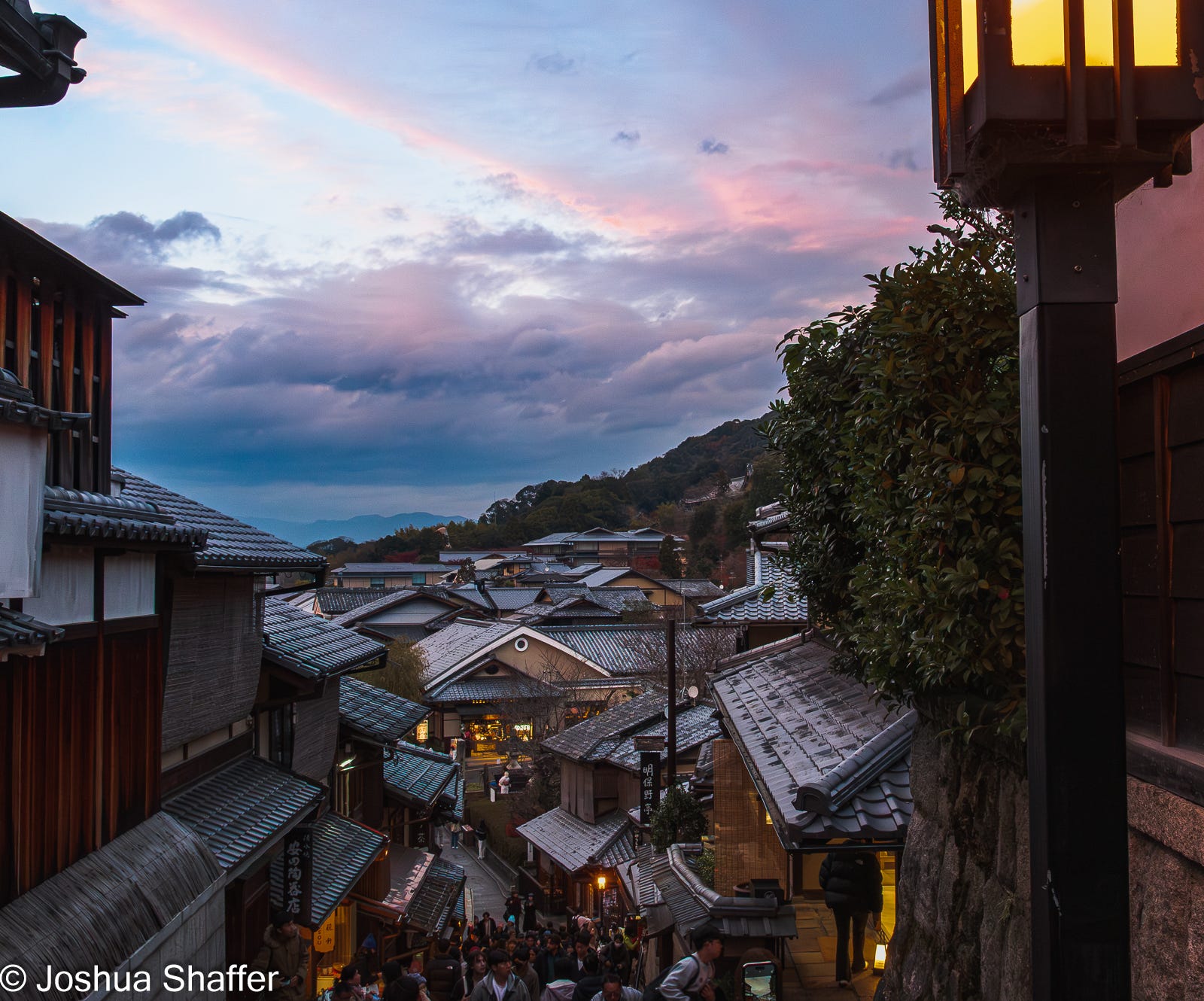
Other must-dos include Sannenzaka street: a place once known for geishas walking down cobblestone, and is now a jam-packed area for hipster clothing and food (no complaints on the food front). The view at sunset is something to behold, which even a throng of people jockeying for best pics for Instagram clout cannot mitigate.
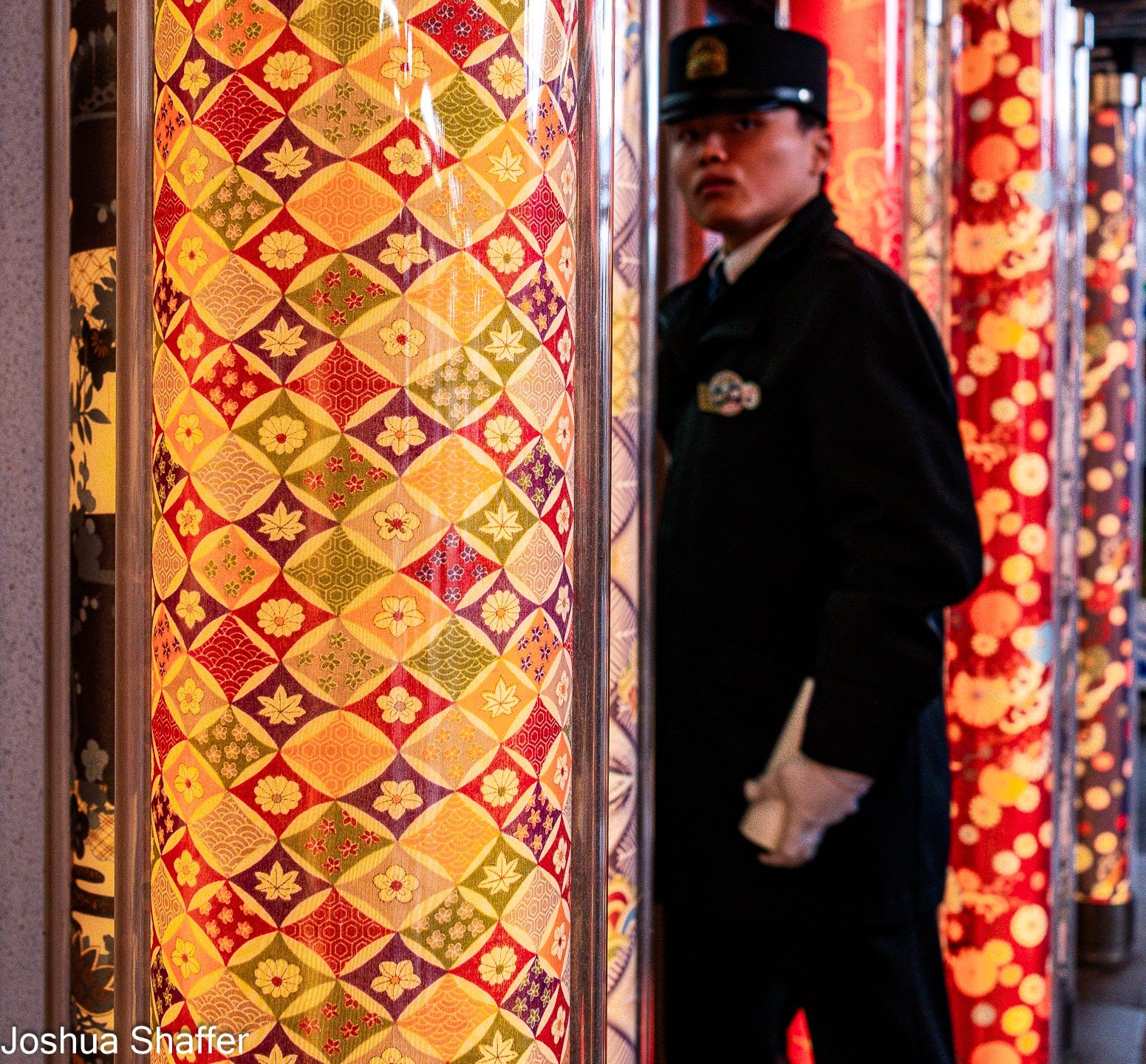
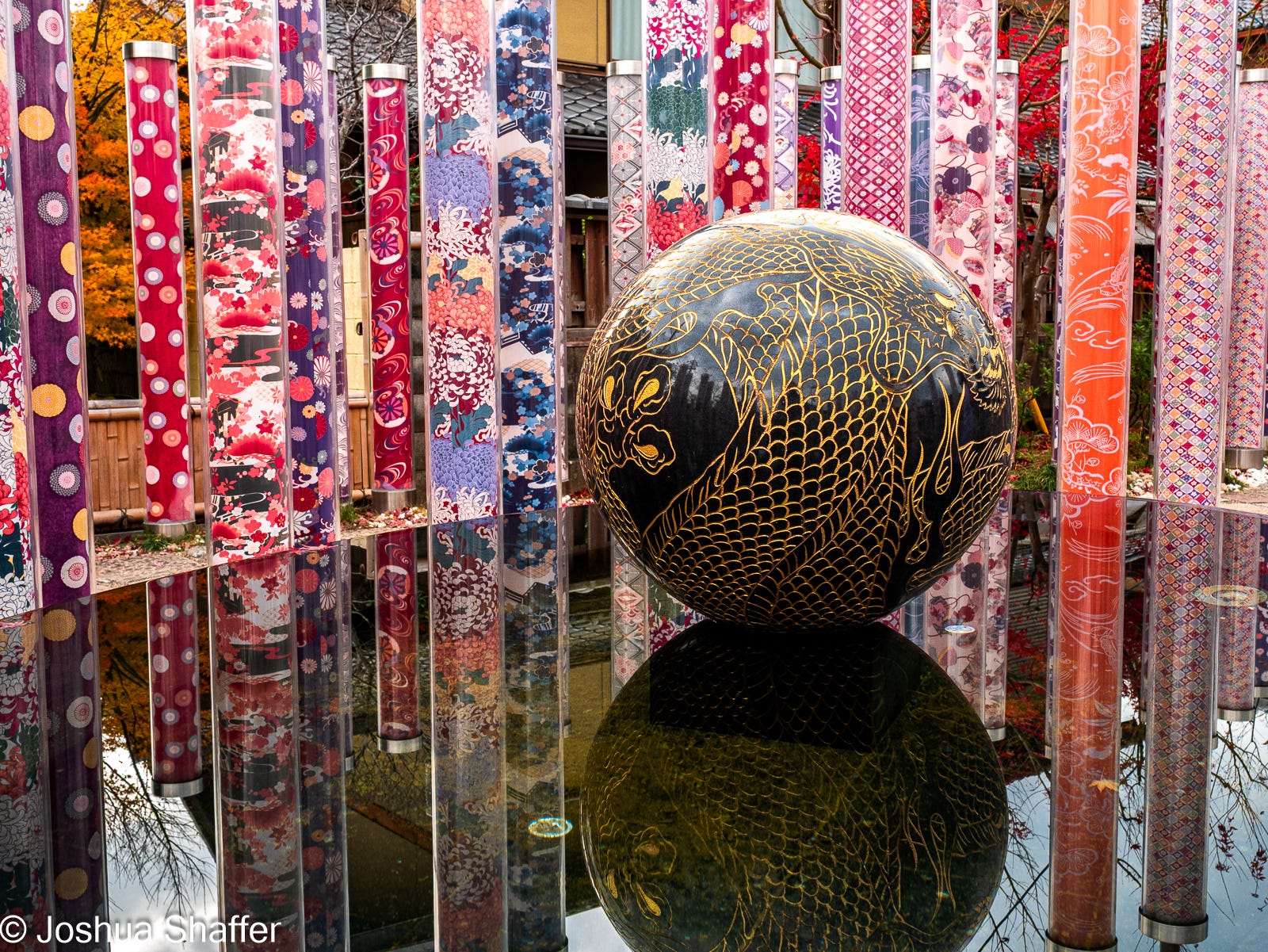
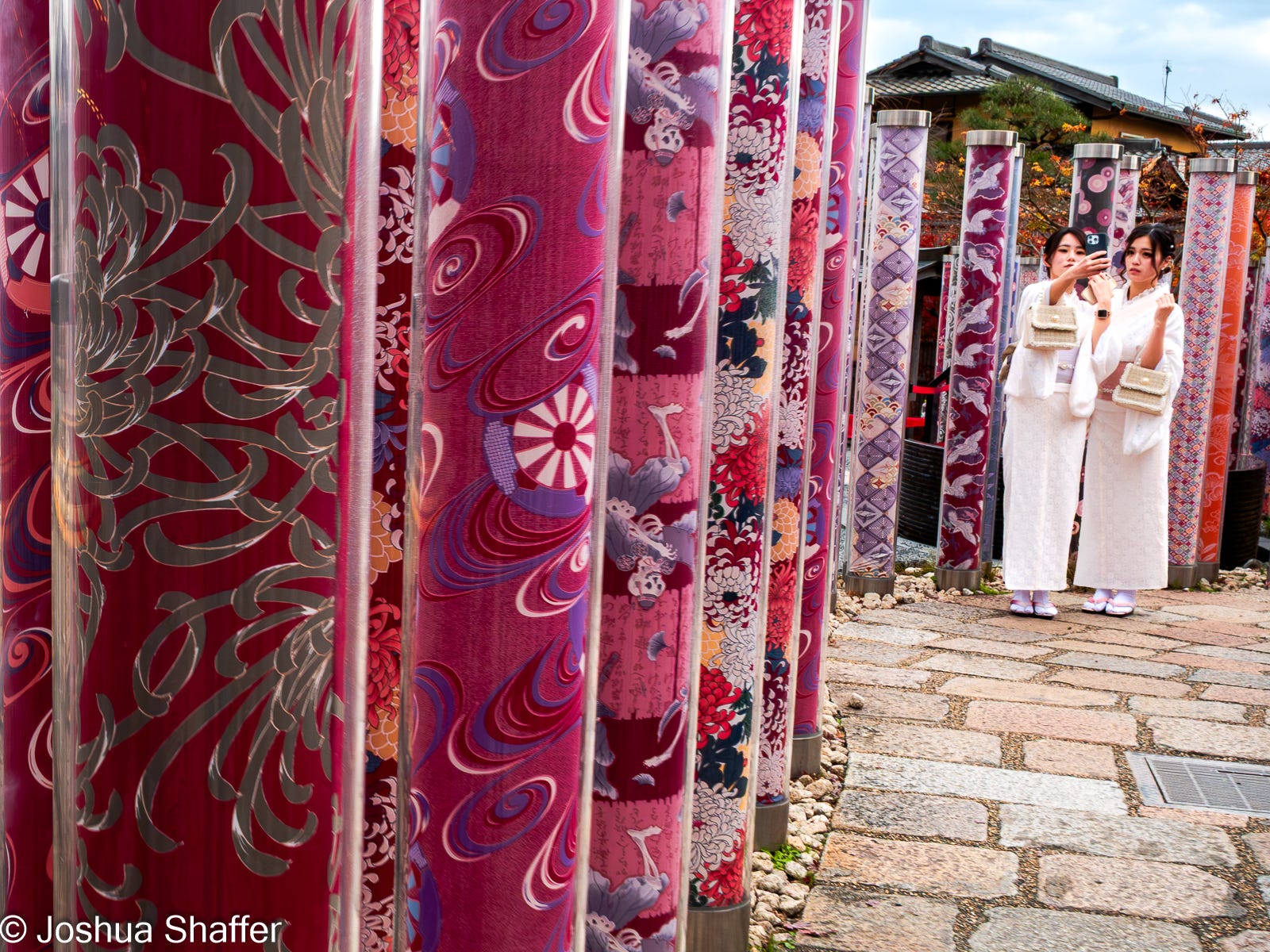
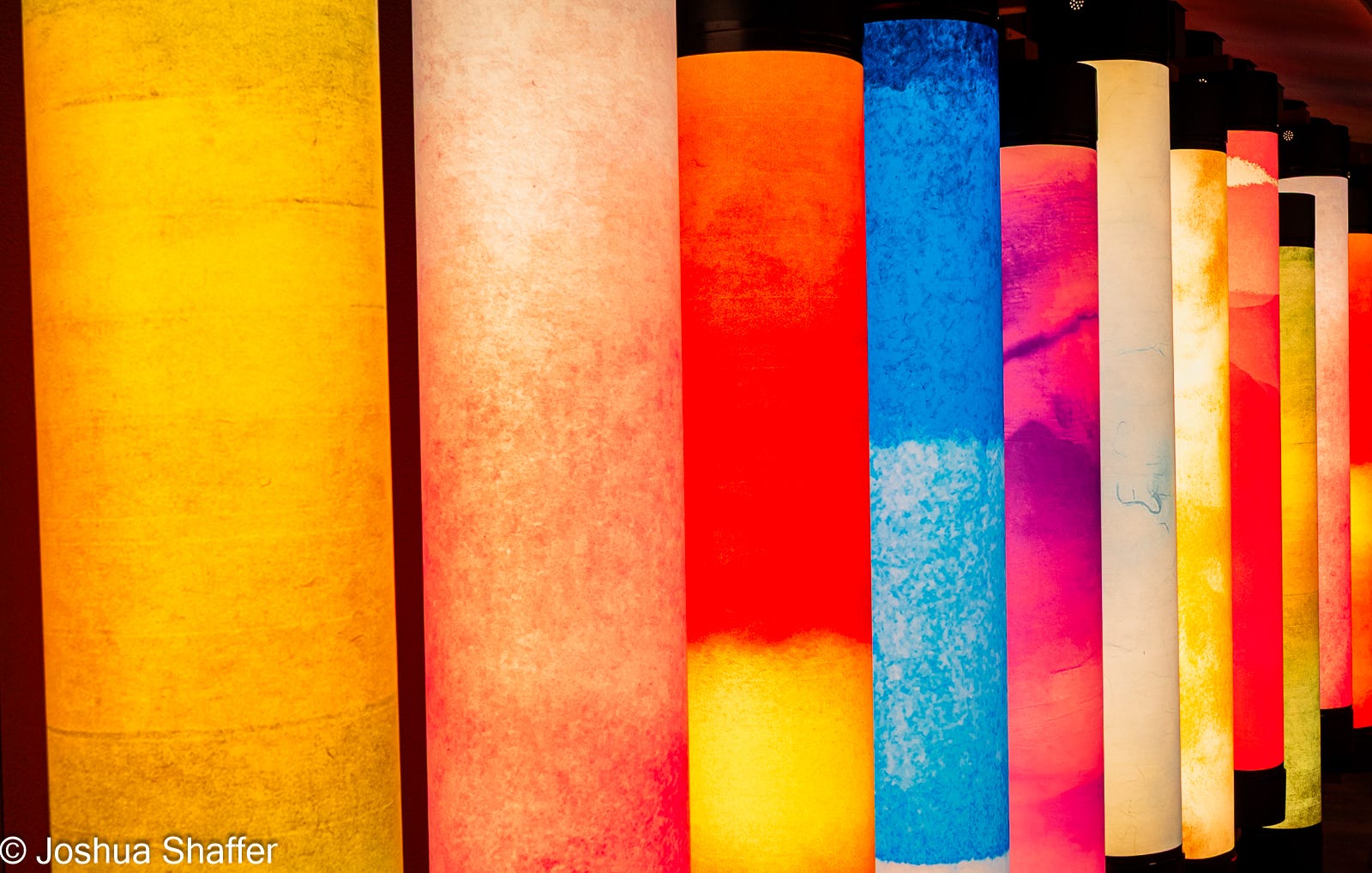
The “Kimono Forest” at Arashiyama station looks lovely and is worth a small detour- especially if you are going to the bamboo forest. The brightly colored pillars and reflective pool were quite tranquil- even next to an underground market that boasted a huge number of college students eating ice cream.
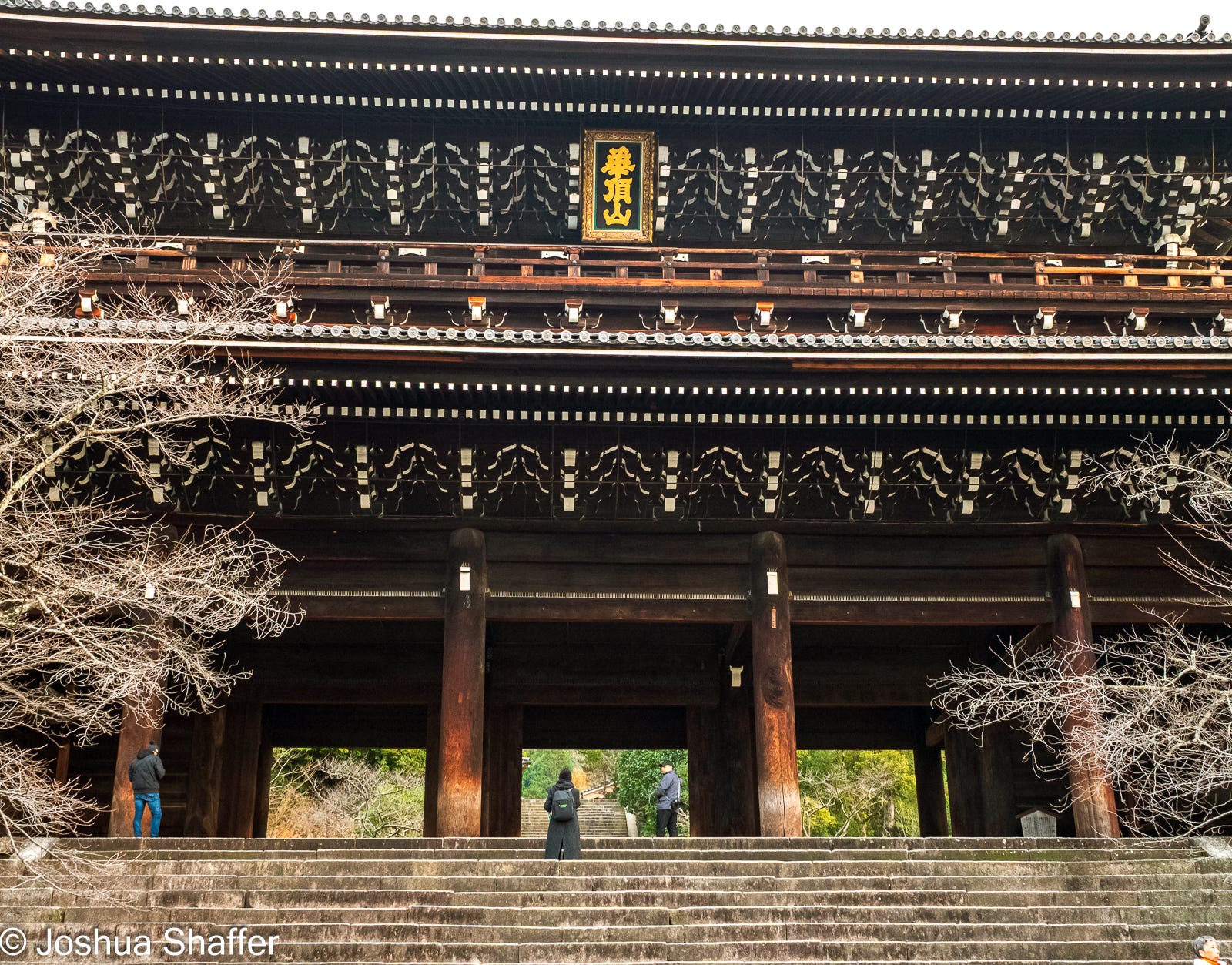
The massive gate at Chionin Sanmon, adjacent to Maruyama Park stands at 24 meters tall and 50 meters wide, making it the largest wooden temple gate in Japan, and dates back to the early 1600s4
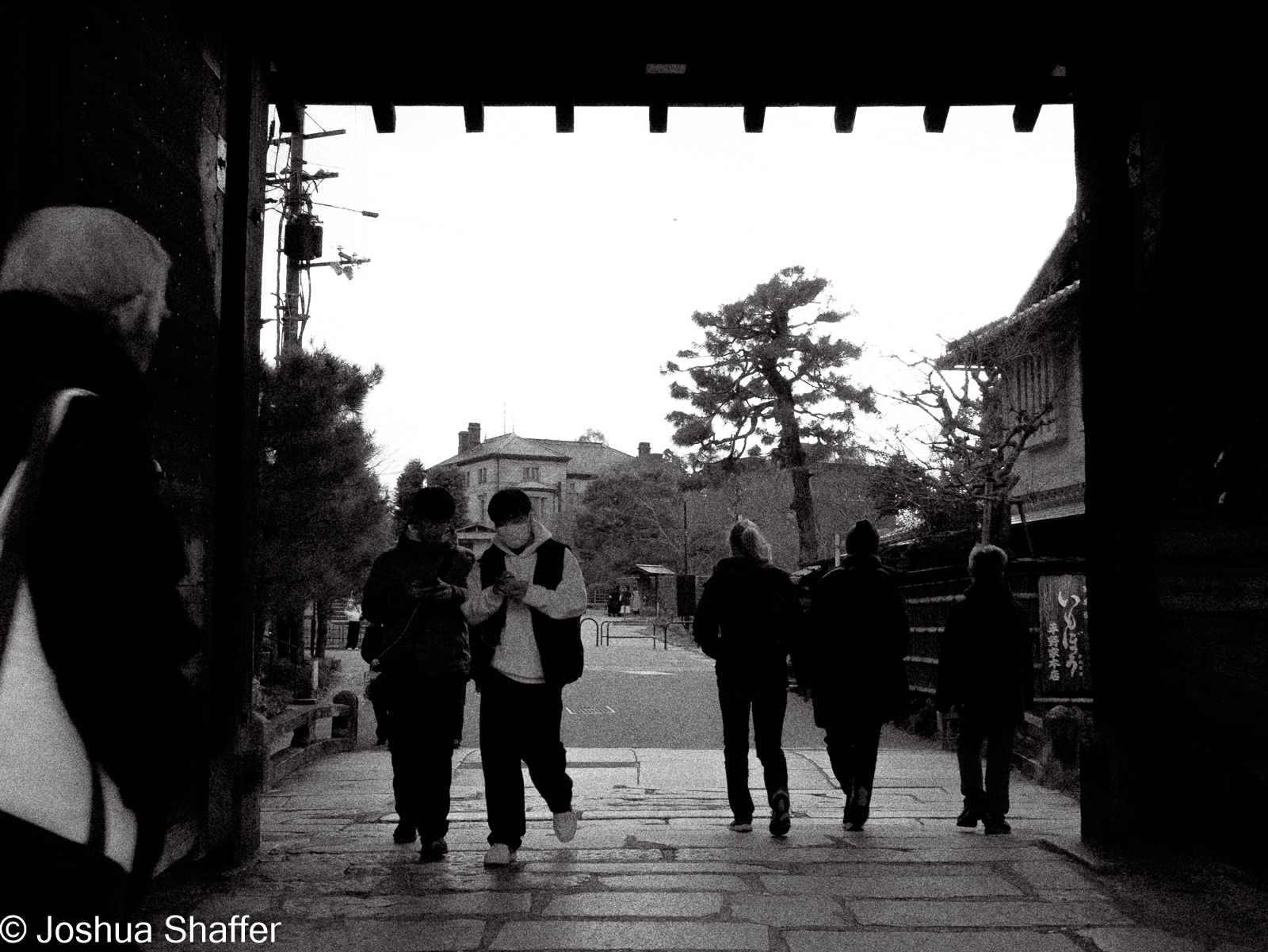
It was also at this gate that I learned about the quaint tradition of “onnazaka”- meaning ladies’ slope. At temples, built normally on hillsides, there is usually a steeper “men’s path” and a gentler “ladies’ slope”. Leave it to the Japanese to add some sexism to their religion (not that they’re exclusively the only culture to do that).
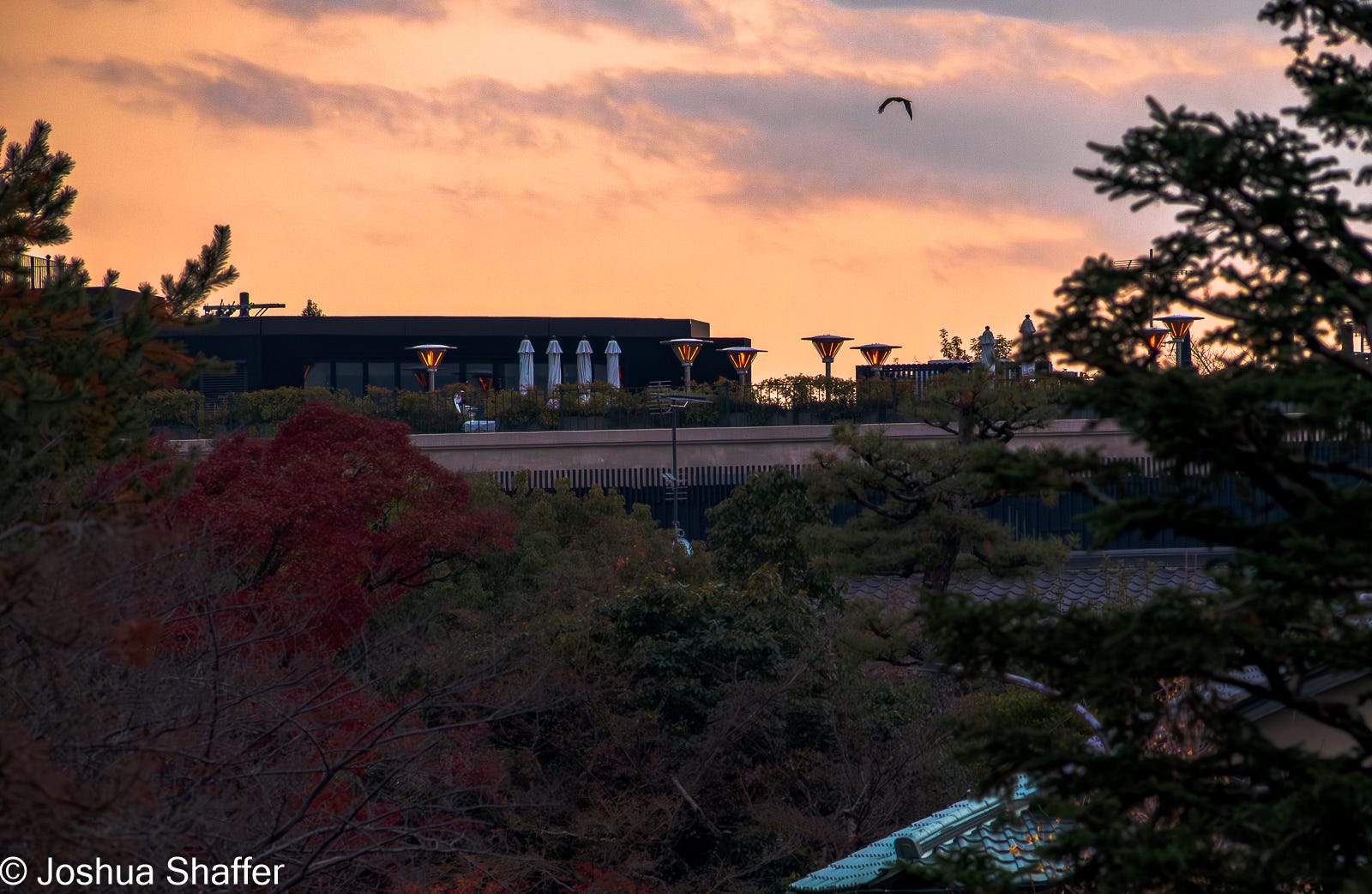
As a wintertime adventure, Kyoto is quite a different animal- far cooler and more orange-hued. It felt as if it were frozen in Autumn. Obviously, springtime in Japan hits so radically different: the Sakura (cherry blossom) season is short but potent; an intoxicating, perfumy feeling carried through the air. Cherry blossom season punches especially hard in Kyoto. Maruyama park, Kawazu-Zakura Cherry Trees in Yodo, and Sewaritei (those two on opposite sides of the river) would be fantastic in the spring or summer, if one were to make the trip then. Or come visit me in Korea, and sample an under-sung cherry blossom season as well.
To Eat:
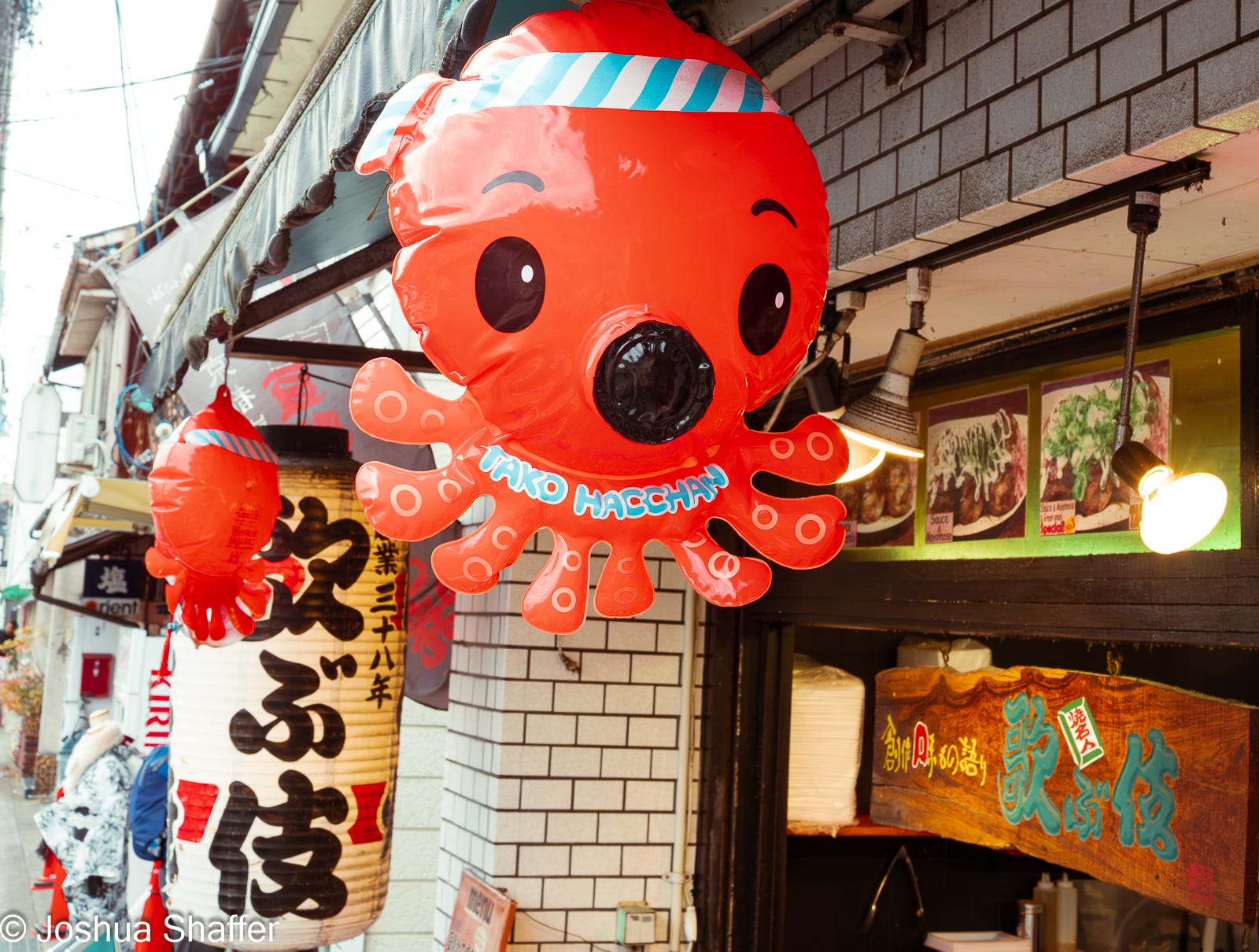
In the couple of days we spent in Kyoto, the absolute greatest, grandest thing we had was ramen- and I have had many a ramen, and this was still among the best I’ve had the pleasure of encountering. It’s found down a nondescript set of stairs, in a door with no signage, and it is called: No Name Ramen. Doing some legwork before heading to Japan, this place came up on many lists of best ramen, best food, best meal, etc. So I had high hopes, and yet they were still outmatched by the depth of flavor.
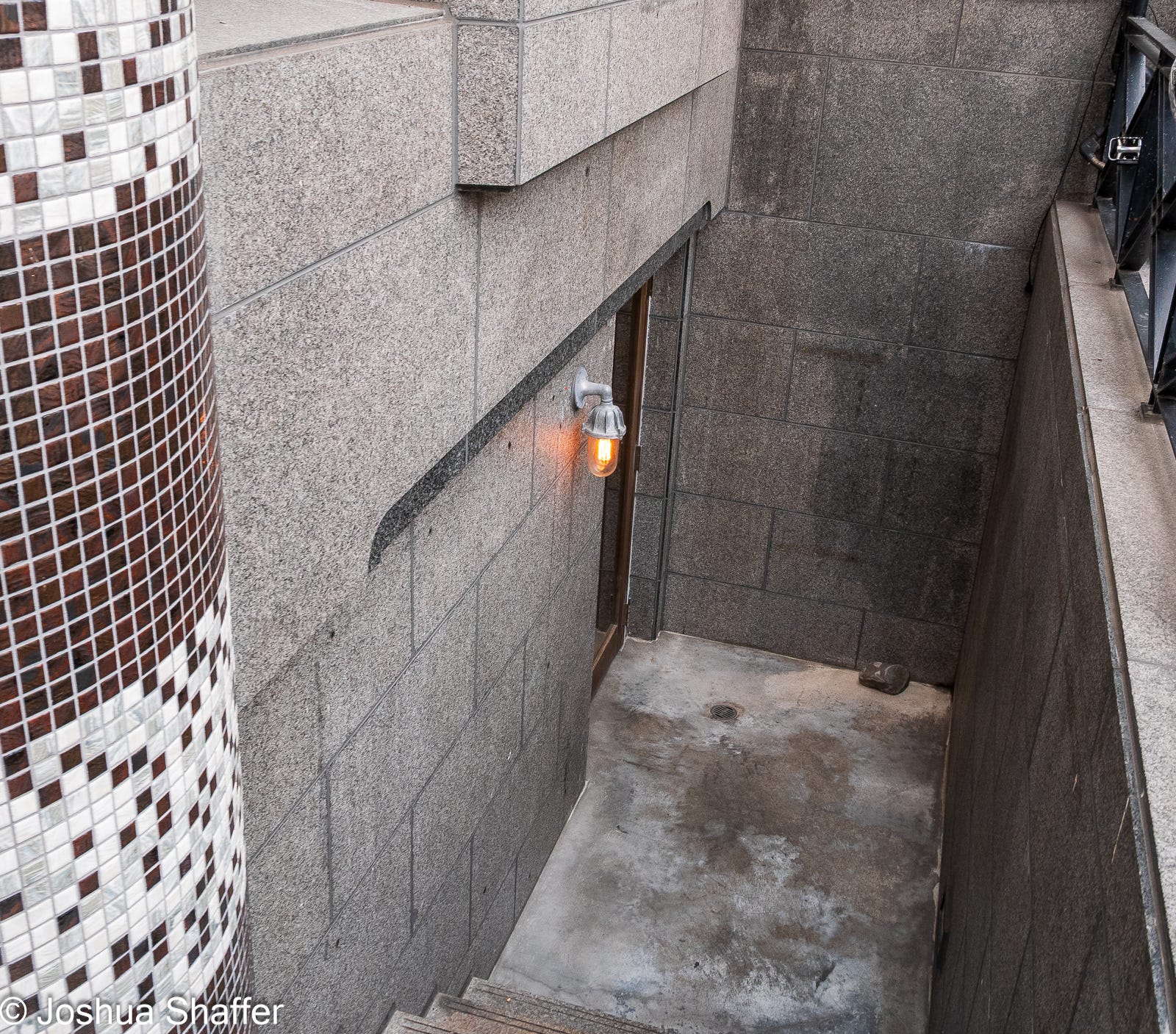
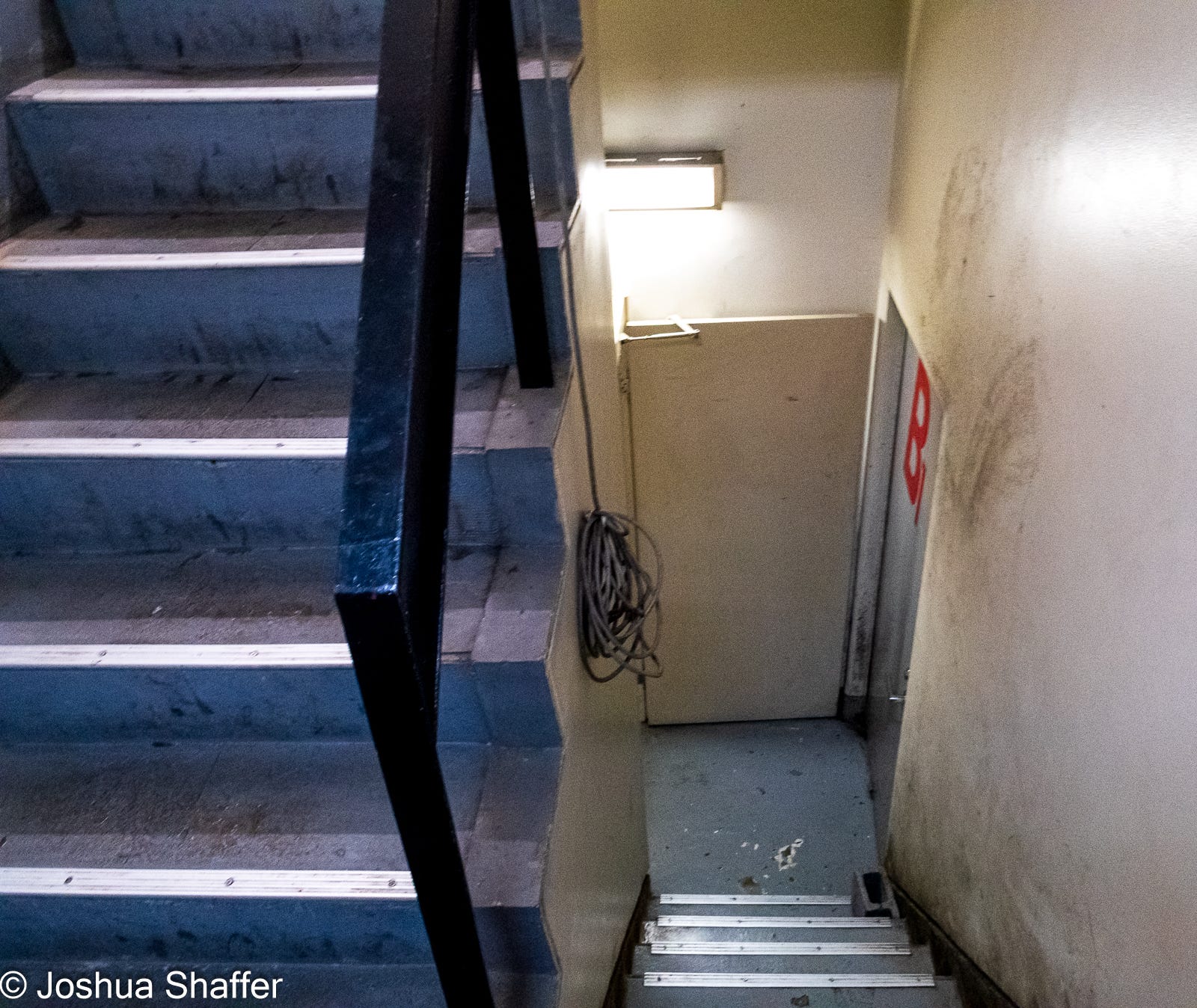

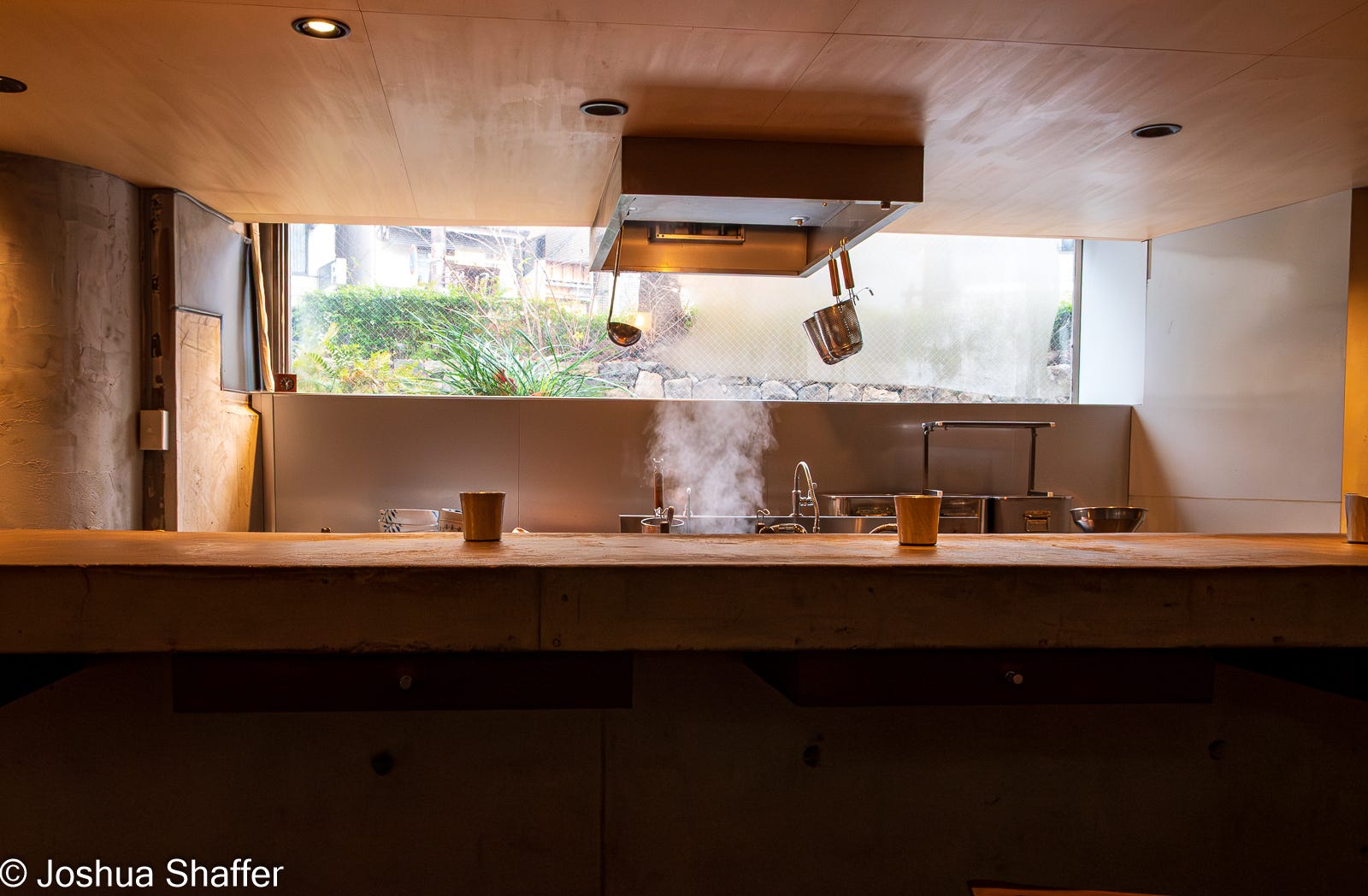
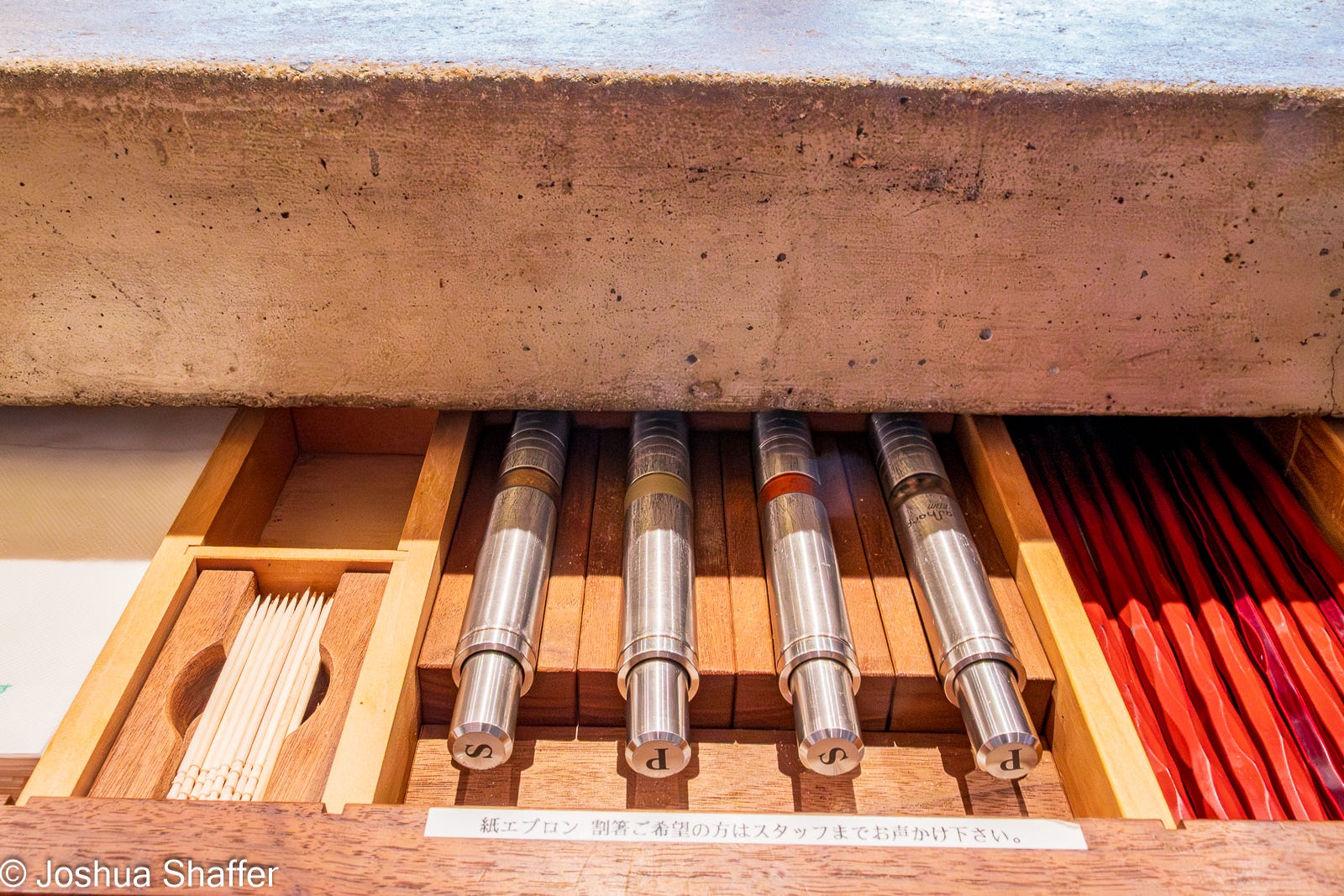
We got there right after opening at 11:45- and the place filled up with a two-hour wait by 12:10, so I recommend going early (no reservations, either). Upon entering, you order at the machine (bring cash) and are presented with three options: ラーメン (ramen), つけ麺 (tsukemen), and カレーつけ麺 (curry tsukemen). Then you are presented with an additional option: thick soup, layered soup, and light soup. I went for thick, the rest of the family layered. After, you have a charsiu option- either beef tripe or black pork (you can also choose veggies if you are so inclined). After, you have all the accoutrements: optional egg on top, rice, and additional noodles - pretty standard for a Japanese shop.
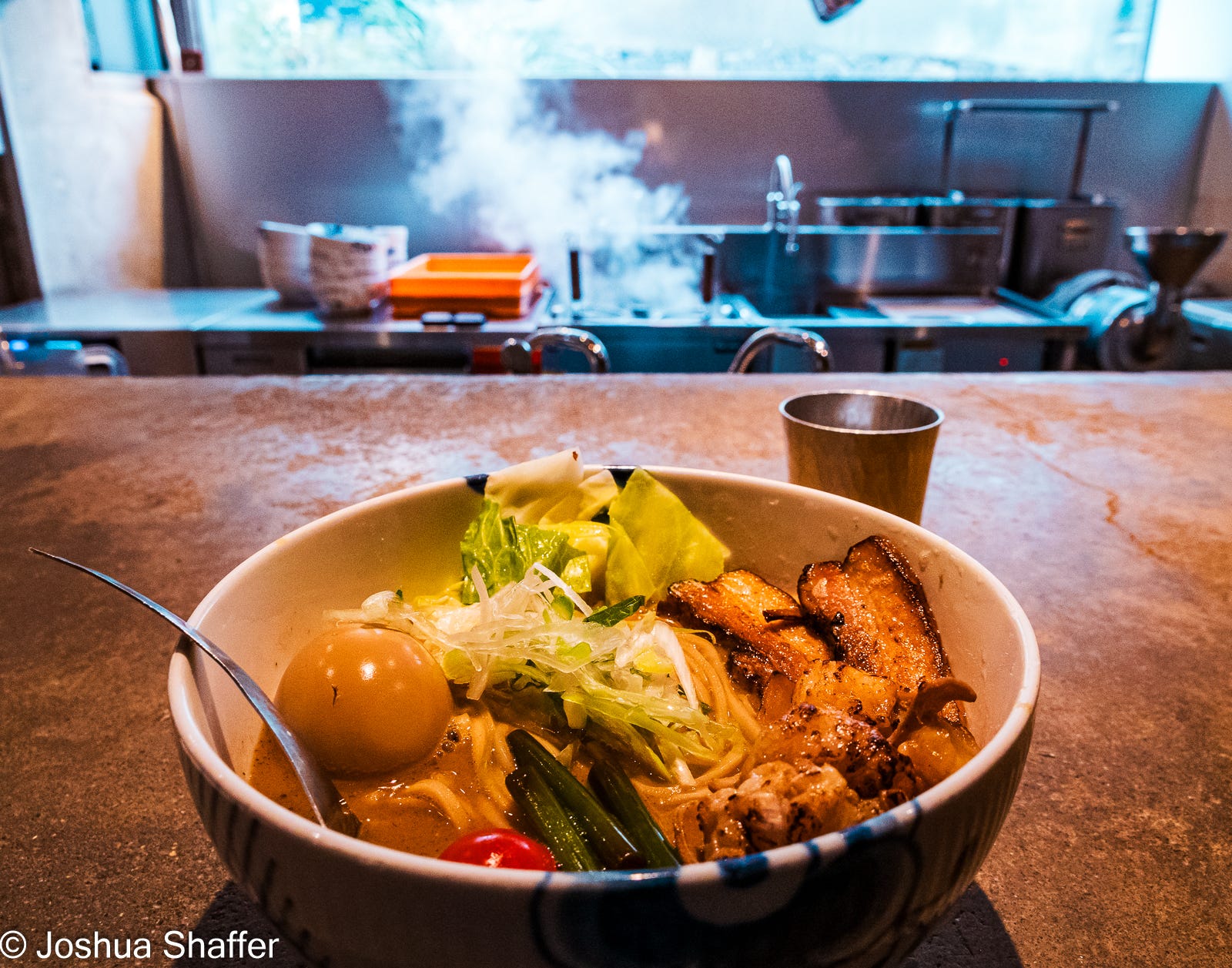
The ramen was anything but standard: veggies roasted to a perfect caramelized crunch, noodles a textural chew of immense satisfaction, and the pork! Heaven. The broth was so incredibly deep and rich in flavor- heavy, yet refreshing at the same time… good for any weather with layers and layers of umami. It’s one of my favorite meals from an unassumingly chic, concrete-encased, underground (quite literally) restaurant.
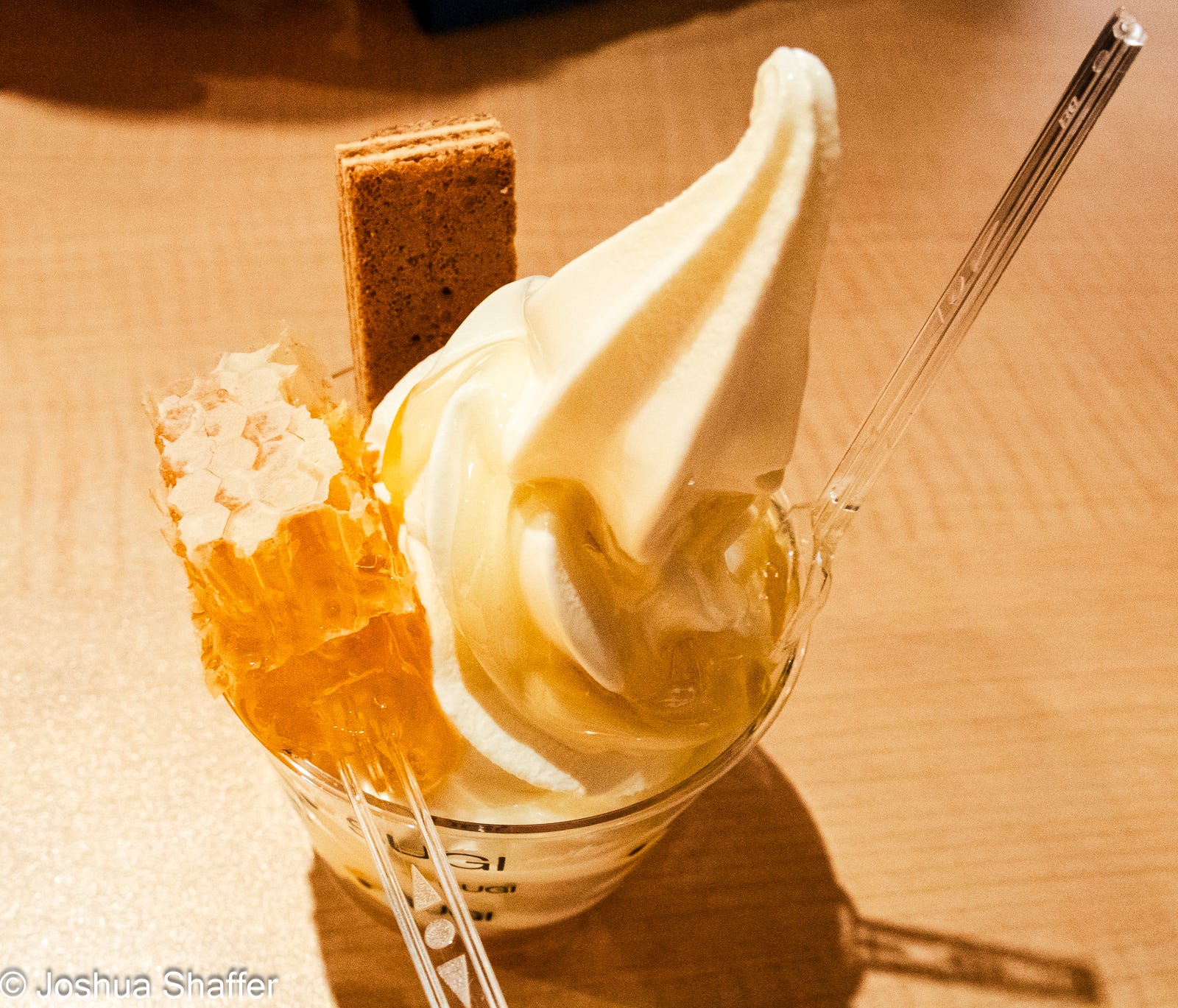
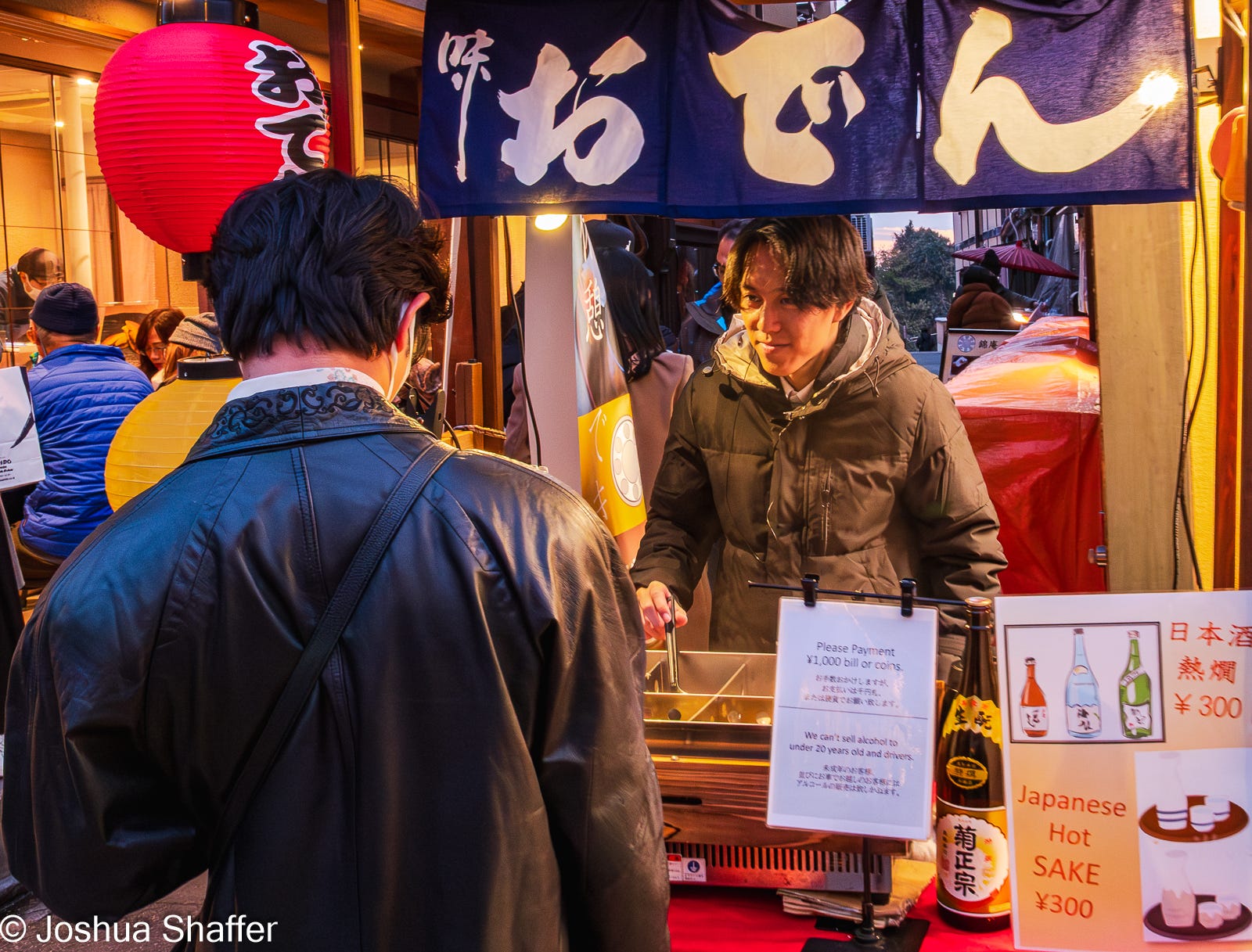
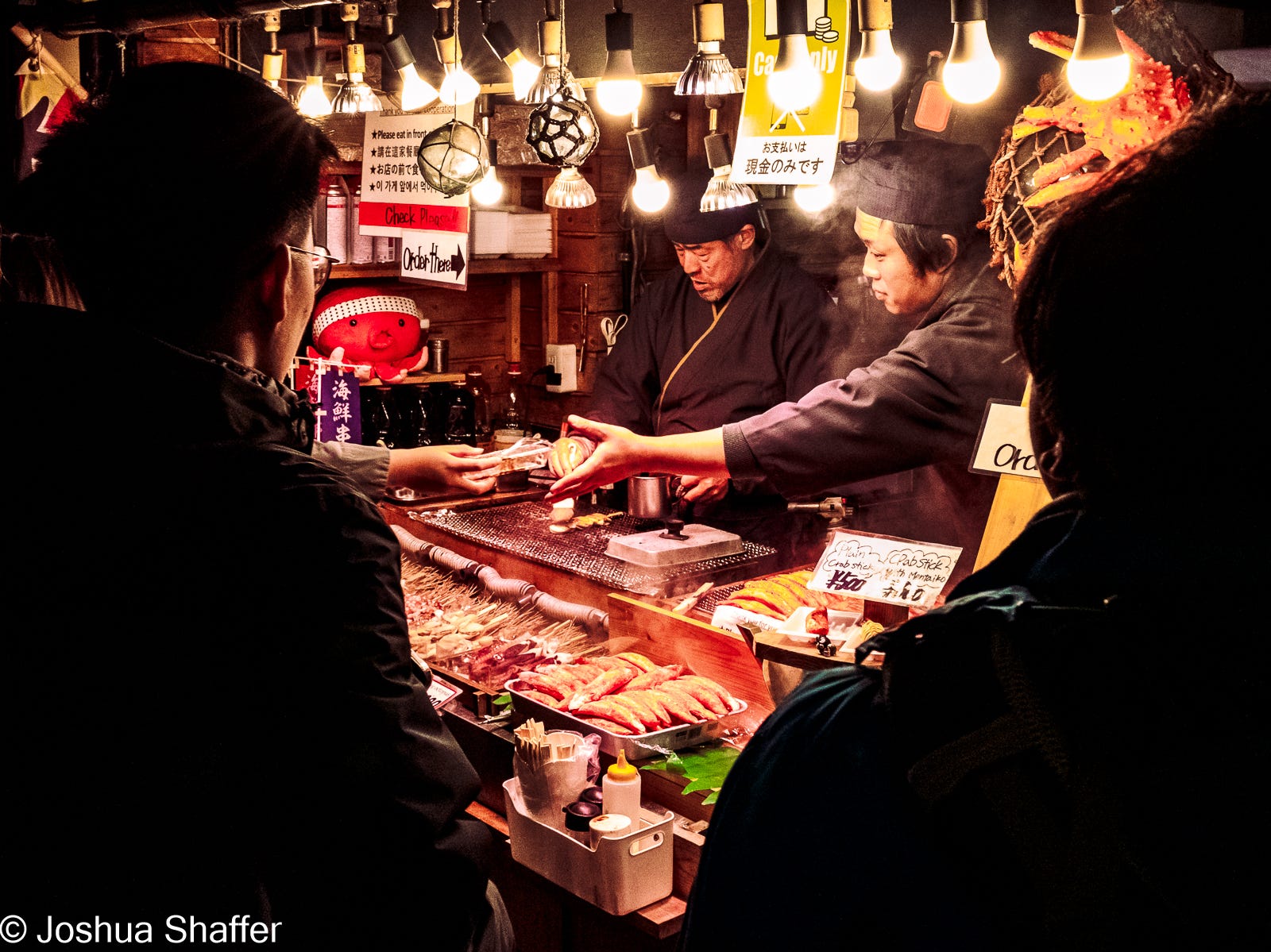
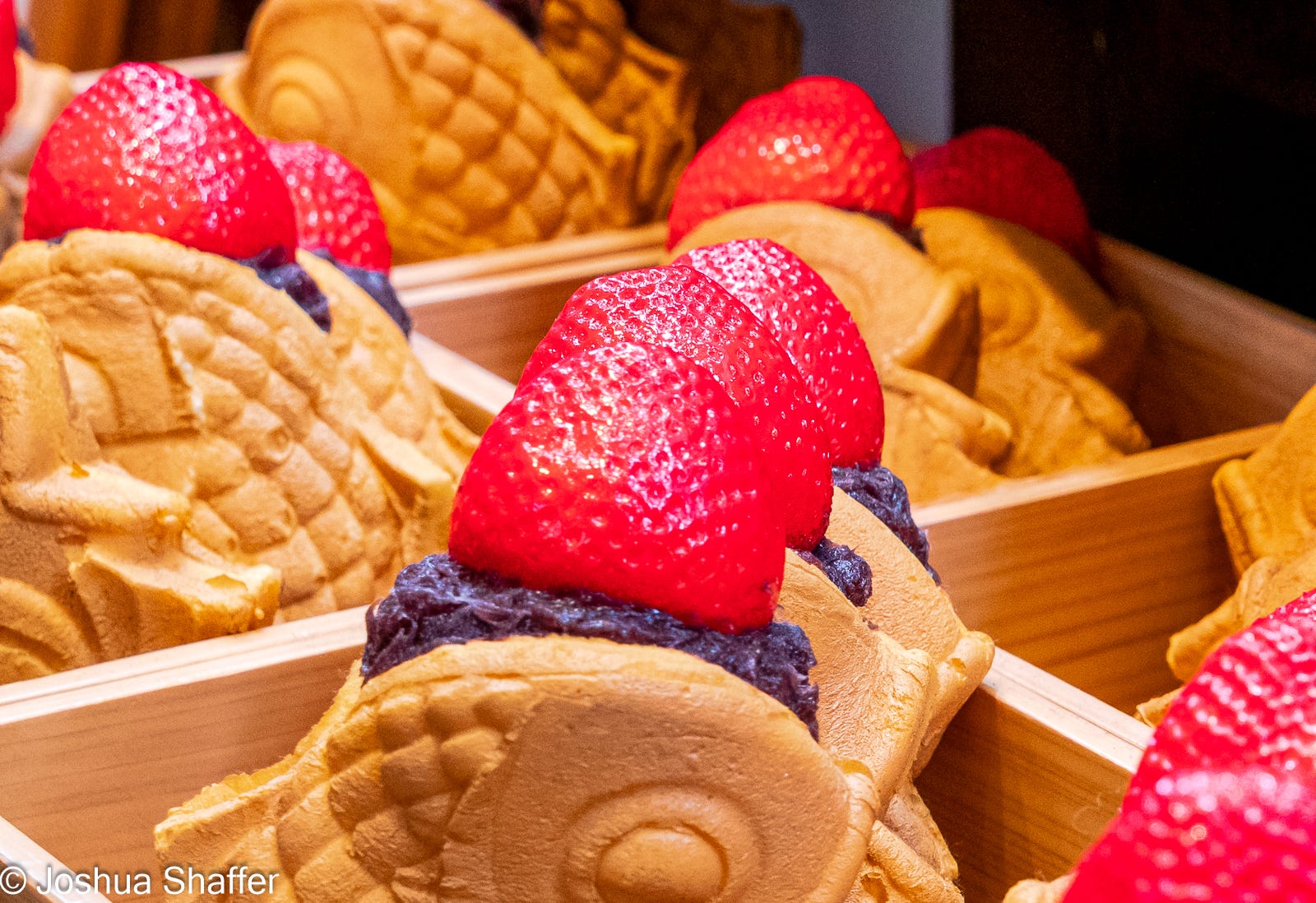
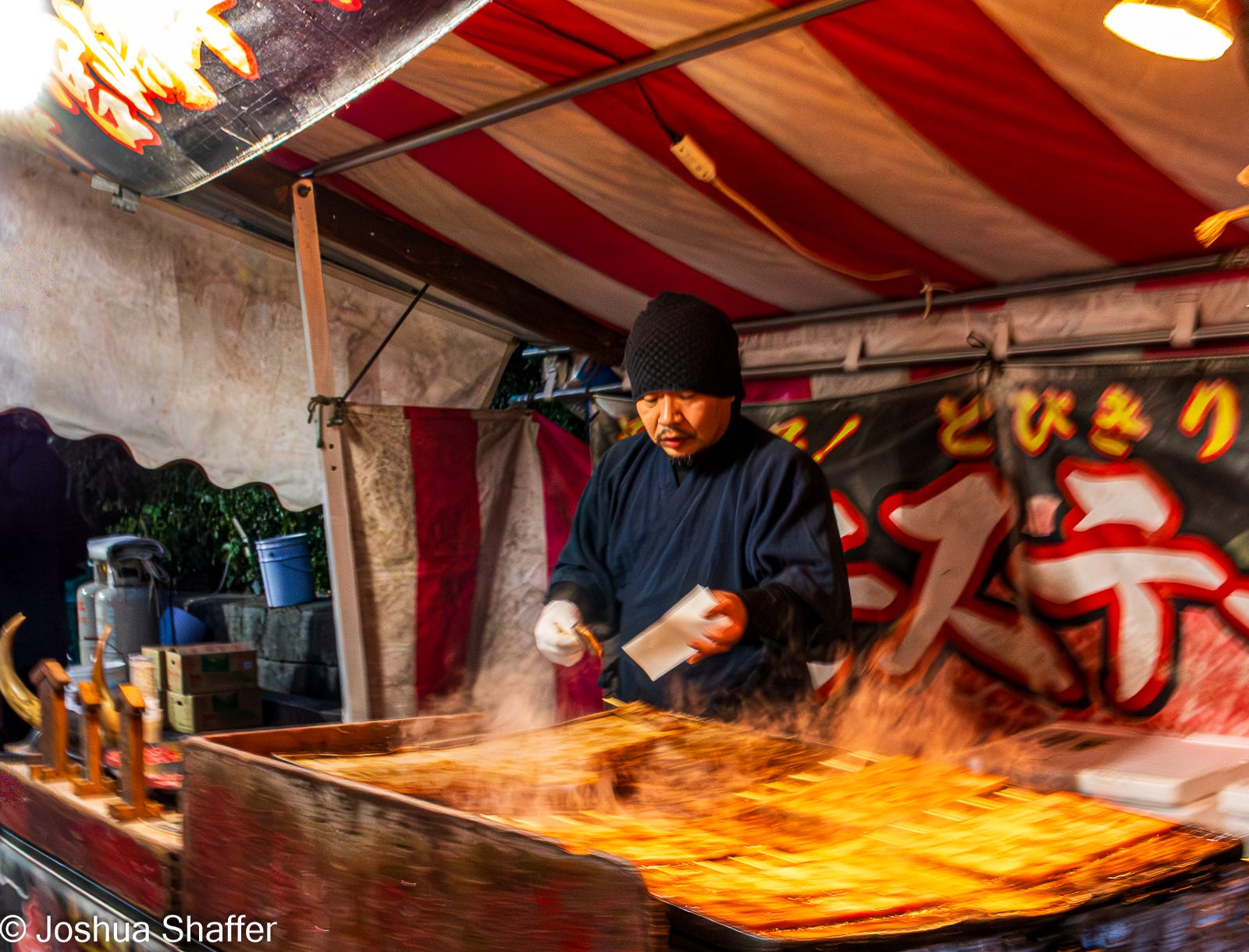
Because of the difficulty in reserving most restaurants5, we opted to eat as we went- finding spots for sushi burritos, coffee from converted VW buses, or croissants from a French bakery in the Nishiki market. We ate outside of Japanese, as well- having Indian one night at Dana Pani En, near our riverside Airbnb. We were treated to fantastic saag lamb, massive naan, and warm hospitality from the proprietor, a gentleman who had been living in Kyoto for almost twenty years..
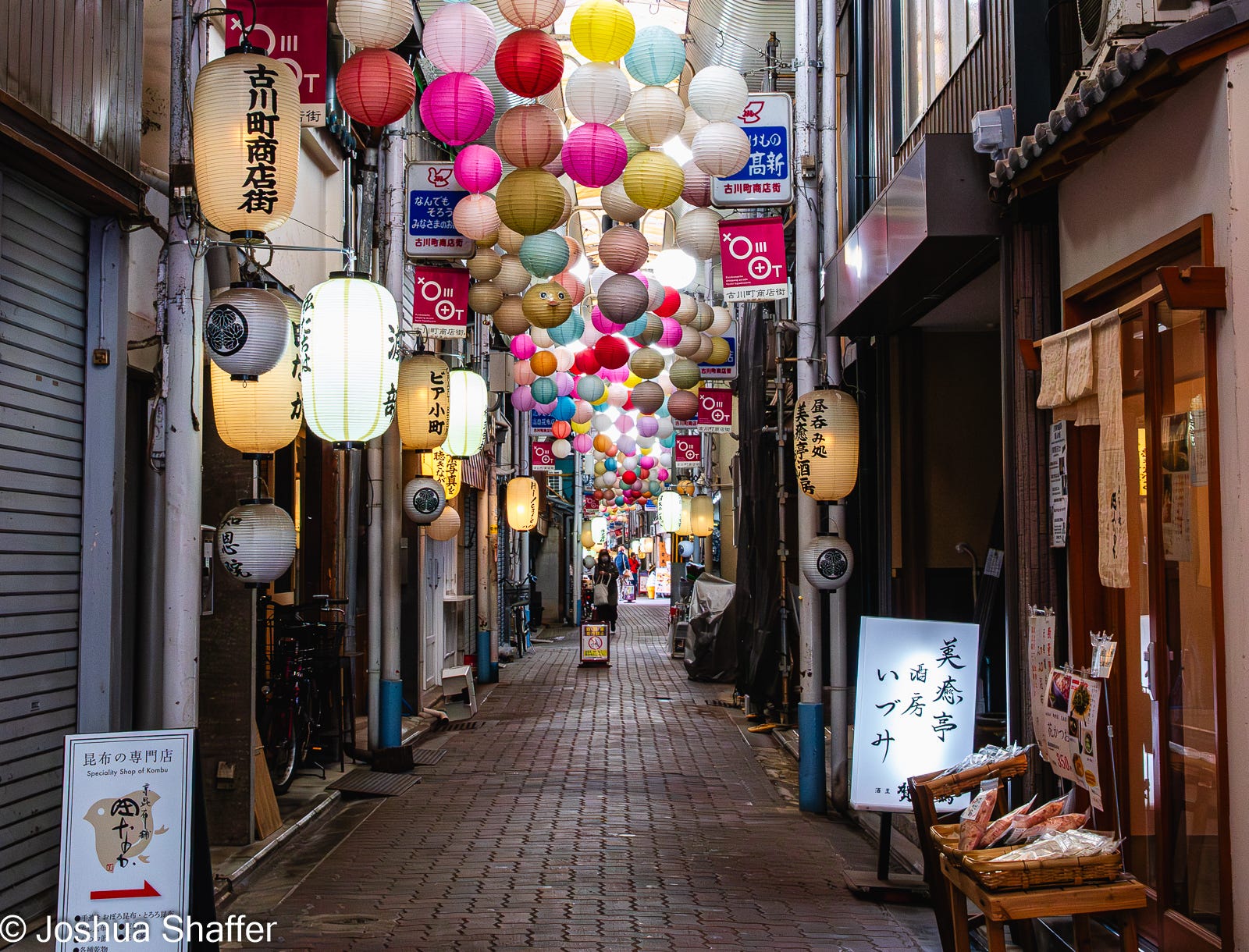
To Drink:
Notable coffee stops included Fuku Coffee Roastery, Söt Coffee Kyoto, and Reunion coffee (a coffee truck near the bamboo forest that also has delicious homemade caramels).
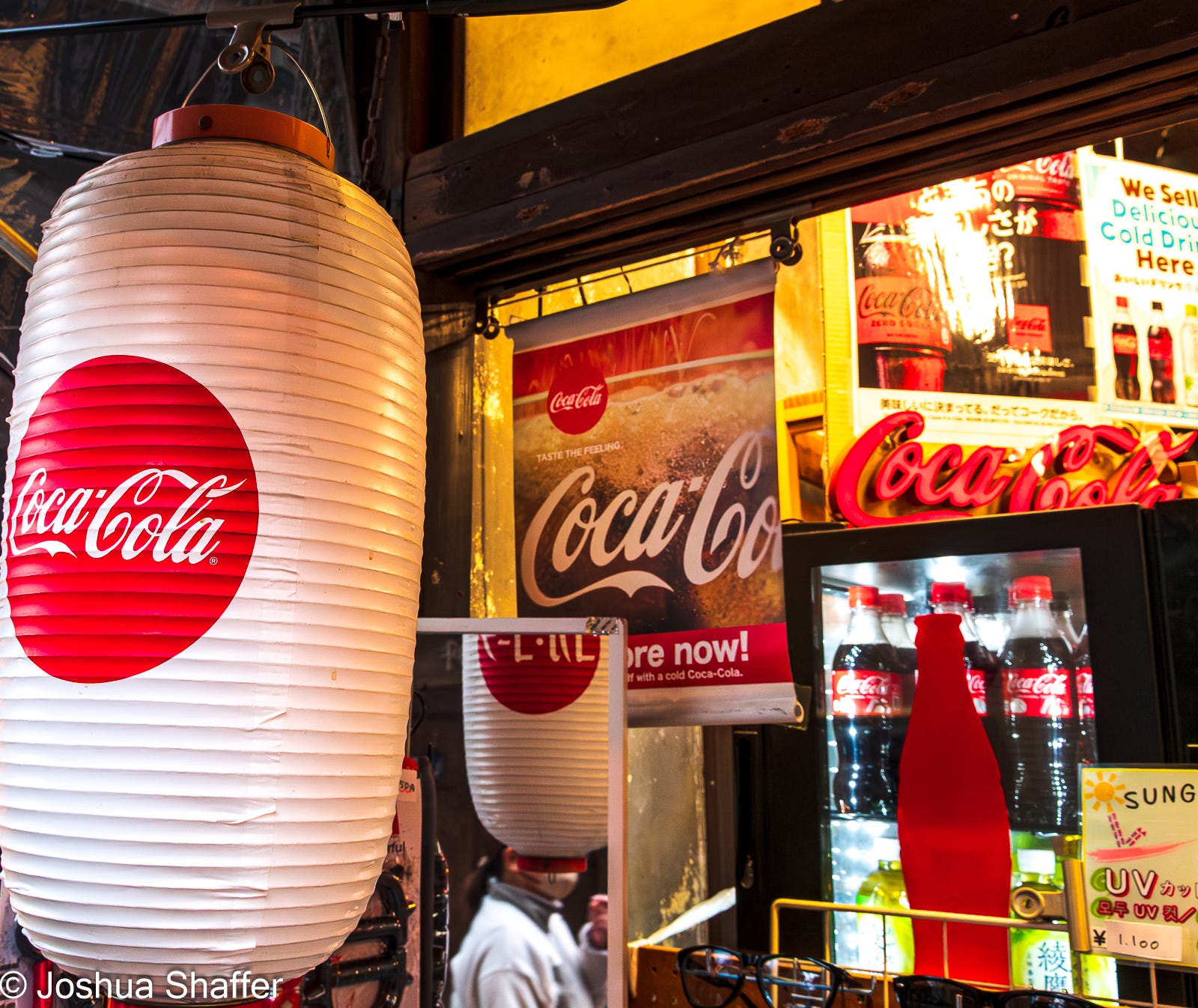
It was both enough time, and nowhere near enough time to be in Kyoto… Future me should do more diligence before arriving. There are many cities a person can do “on the fly”, but this isn’t as true in Japan. I would make my reservations, experience more cultural activities (a Noh show, mochi-making, or tea ceremony)- and yes, try to actually get inside the VIP destination that is the Nintendo Museum. Thanks for reading.
-JS

The current devaluation of the Yen plays a big part in Japan’s woes currently.
Kinkaku-ji, the Temple of the Golden Pavilion; Ginkaku-ji, the Temple of the Silver Pavilion; and Ryōan-ji, famous for its rock garden.
IF you want to go to the Museum (and I so badly wanted to!), then you need to apply for a lottery system three months before you intend to go- and there’s no real wiggle room on the date- so you need to choose- and then you will find out the 1st of the month of if you were chosen- and you have one week to pay the $30 per person ticket price. Is this easy to do? Probably not! Will it be made more difficult without a Japanese phone number? Probably! I will try again sometime in the future- but be forewarned, as this was a disappointment for my family and myself.
https://www.japan-guide.com/e/e3928.html
The small size of most places means a table for four walk-in is impossible- maybe 1 person could get a walk in, two is pushing it.